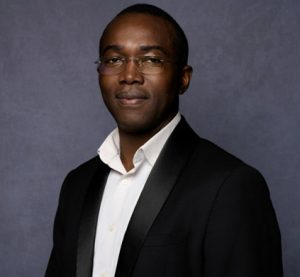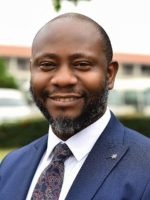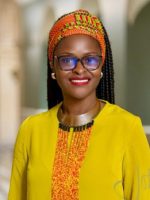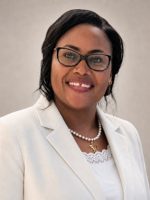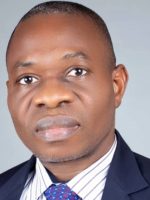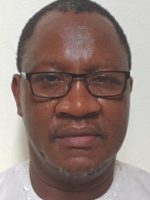
Dr. Moumini Niaoné is a Burkinabè physician, public health scholar, and community health leader whose work sits at the intersection of primary health care, health promotion, social and behavioral sciences, humanitarian response, and community-led development.
He is a PhD student in Public Health in the Department of Health, Behavior and Society at the Johns Hopkins Bloomberg School of Public Health. He holds a Doctorate of Medicine from the University of Ouagadougou and a Master of Public Health from Indiana University, where he specialized in social, community, and behavioral health as a Fulbright Scholar. He also holds an MSc in Sexual and Reproductive Health Policy and Programming from the London School of Hygiene and Tropical Medicine, a Master’s degree in the Coordination and Management of Humanitarian Actions from the Institut Supérieur de Sécurité Humaine in Burkina Faso, and the Master Certified Health Education Specialist credential of the NHCES (USA).
Before joining Johns Hopkins, Dr. Niaoné served as Director of Community Health at Burkina Faso’s Agency of Primary Health Care. In that role, he contributed to national efforts to strengthen community health, primary health care, tobacco control, and public health emergency response. He has also taught health promotion, behavioral theories, community engagement, and social mobilization in medical and public health training institutions in Burkina Faso.
Dr. Niaoné is the founding Executive Director of Pull for Progress Burkina Faso, a nonprofit organization focused on health promotion, education, community development, and support to vulnerable populations, including internally displaced persons and children living on the streets. His field experience includes the implementation of community health clubs, community-based sexual and reproductive health interventions, COVID-19 misinformation response, and grassroots health promotion initiatives in underserved communities.
His research and collaborative work focus on health equity in humanitarian settings, particularly gender-based violence, contraceptive access, and the mental health of internally displaced populations. Through international research collaborations, he examines how crisis, displacement, and fragile health systems shape the lives and care-seeking trajectories of vulnerable communities.
Dr. Niaoné’s contributions have been recognized through national, continental, and international distinctions, including the Knight of the Order of Merit of Burkina Faso in 2019, the Institute of International Education Rodman Rockefeller Centennial Fellowship in 2020, selection for the Africa CDC–Kofi Annan Fellowship in Global Health Leadership in 2023, the Community Health and Humanitarian Impact Award from the Institute of Primary Health Care in Ethiopia in 2025, and the Outstanding Teaching Award from the Department of Health, Behavior and Society at Johns Hopkins University in 2026.
Across research, policy, teaching, and community practice, Dr. Niaoné’s work is grounded in the conviction that public health must be scientifically rigorous, culturally responsive, and rooted in the lived realities of communities. He brings together medical training, public health scholarship, community organizing, and humanitarian engagement to advance health equity and strengthen community capacity in fragile and resource-constrained settings.