Bundibugyo Virus Disease (BVD) Outbreak in the DRC and Uganda
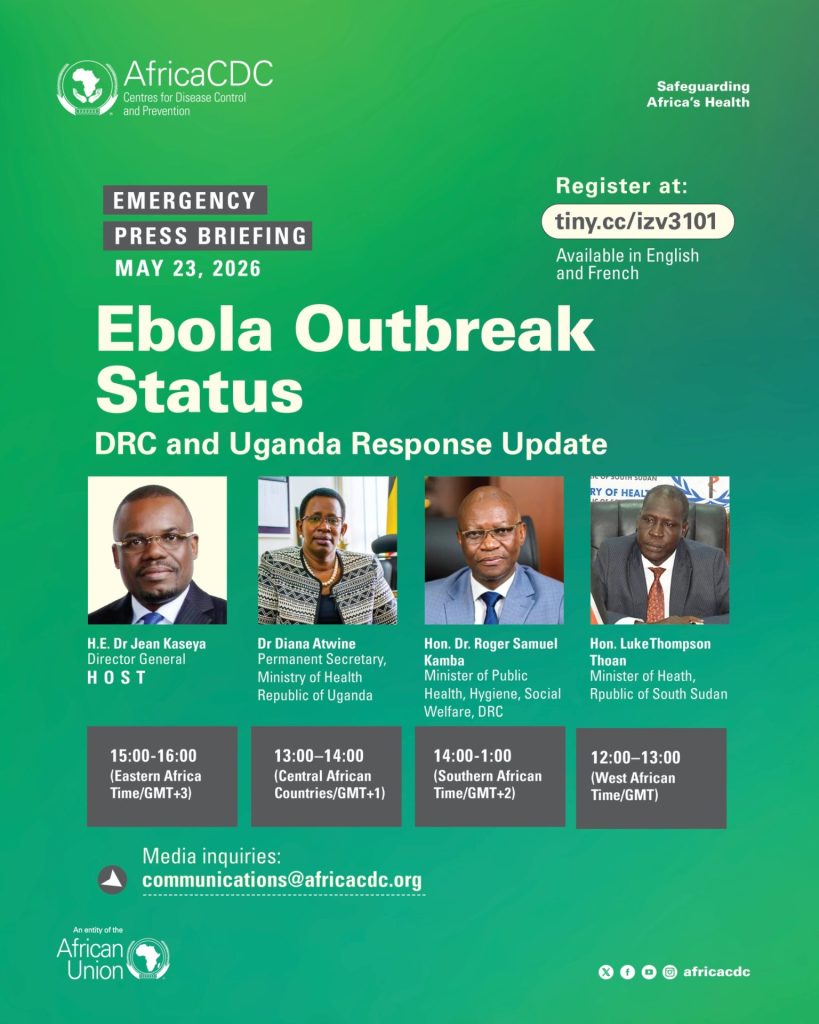
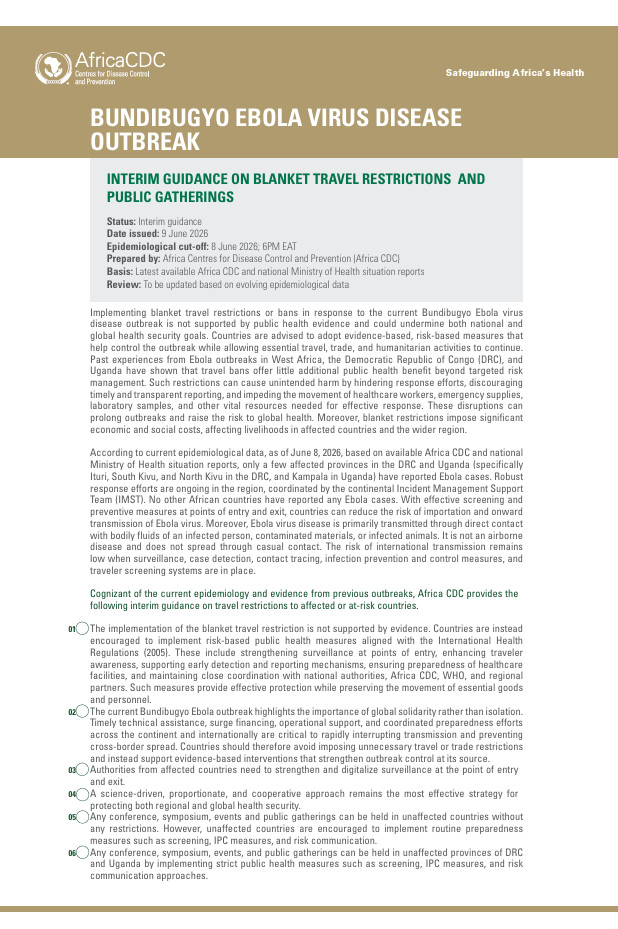
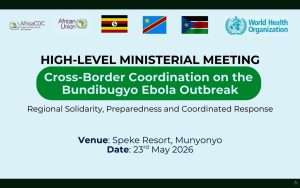
Africa CDC is closely monitoring and coordinating the response to the ongoing Bundibugyo Virus Disease (BVD) outbreak affecting the Democratic Republic of the Congo and Uganda.
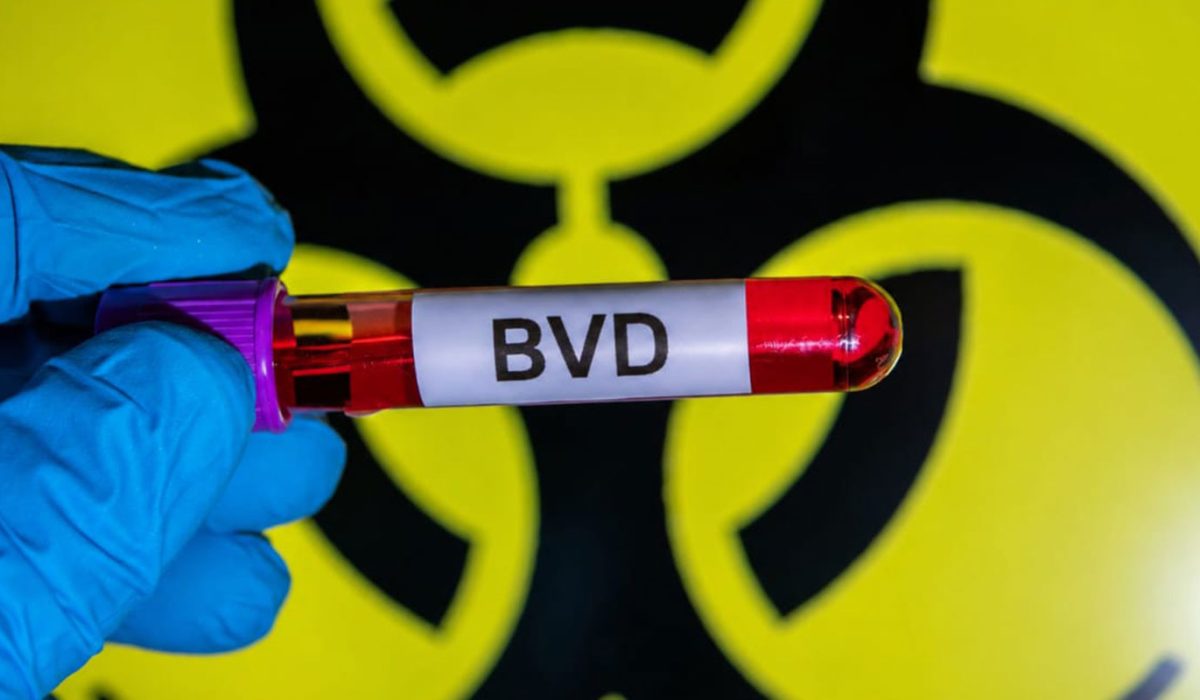
Bundibugyo Virus Disease is a severe and often fatal form of Ebola caused by the Bundibugyo strain, one of the six known Ebola virus species. The disease poses a serious threat to public health, regional stability, cross-border movement, and vulnerable communities, particularly in areas with active population mobility and limited health resources.
The virus spreads through direct contact with infected animals, bodily fluids of infected individuals, contaminated surfaces, and unsafe burial practices. Early symptoms include fever, severe headache, weakness, vomiting, diarrhea, muscle pain, and, in some cases, unexplained bleeding or bruising.
In response, Africa CDC is working closely with affected Member States, Ministries of Health, regional partners, and international stakeholders to strengthen surveillance, laboratory capacity, risk communication, cross-border coordination, infection prevention and control, and emergency response operations.
This webpage serves as a central platform for situation updates, technical guidance, press releases, public health advisories, and response resources related to the Bundibugyo Virus Disease outbreak.
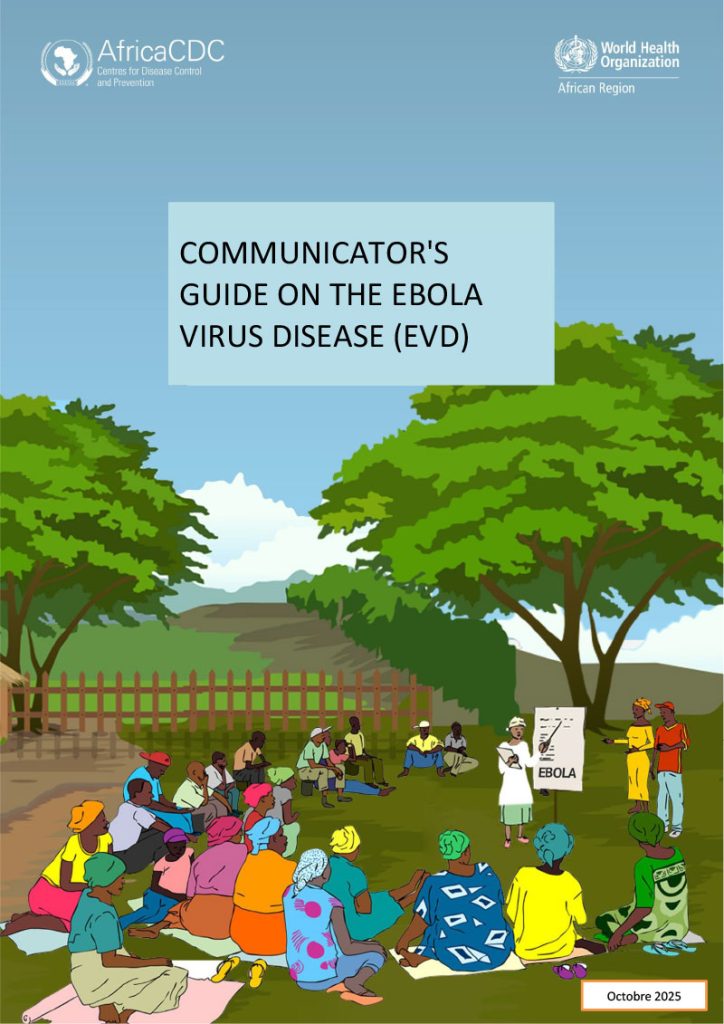
The communicator’s guide in the context of the Ebola virus disease epidemic is a working tool developed by the Risk Communication and Community Engagement (RCCE) pillar of the Continental Incident Management System (CIMS), in response to the sixteenth Ebola virus disease outbreak declared on September 4, 2025.
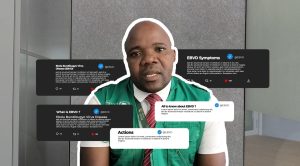
Communicators, including primary health workers, community volunteers, local leaders, and all those involved in raising awareness, play a vital role in communicating the risks associated with Ebola and mobilising the community to adopt recommended practices. It is therefore essential that these actors are equipped with the necessary skills to communicate effectively and interact constructively with communities.
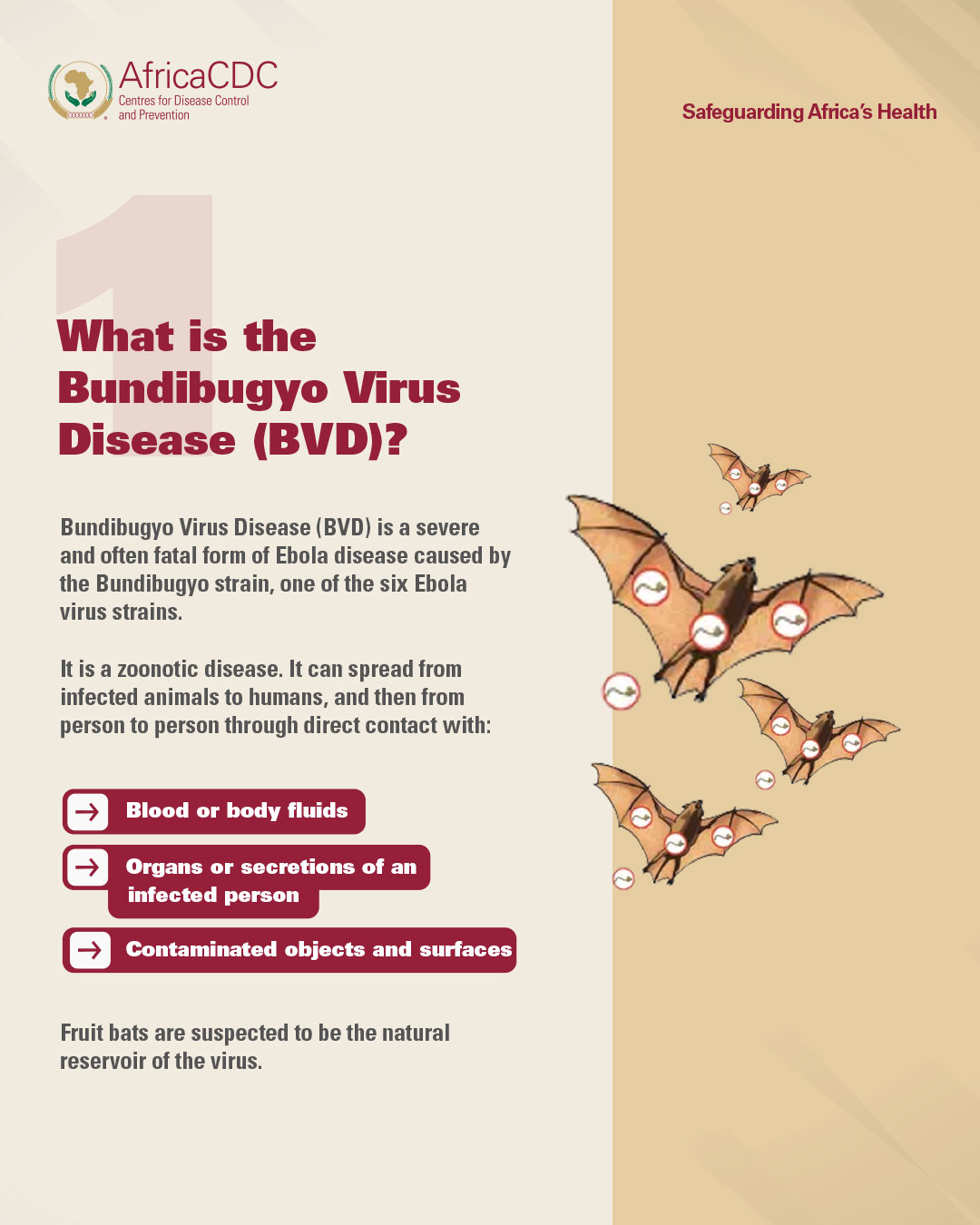
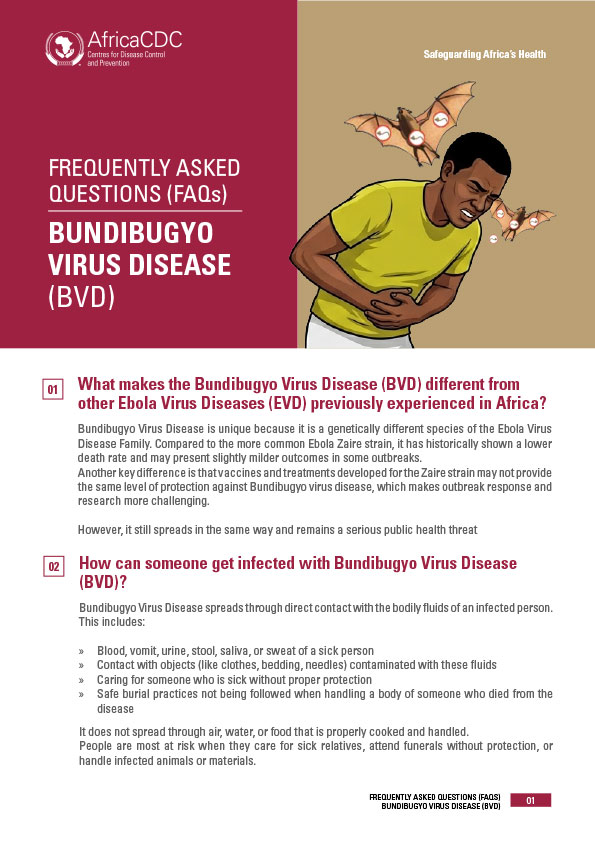
Bundibugyo Virus Disease (BVD) is a severe and often fatal form of Ebola disease caused by the Bundibugyo strain, one of the six Ebola virus strains.
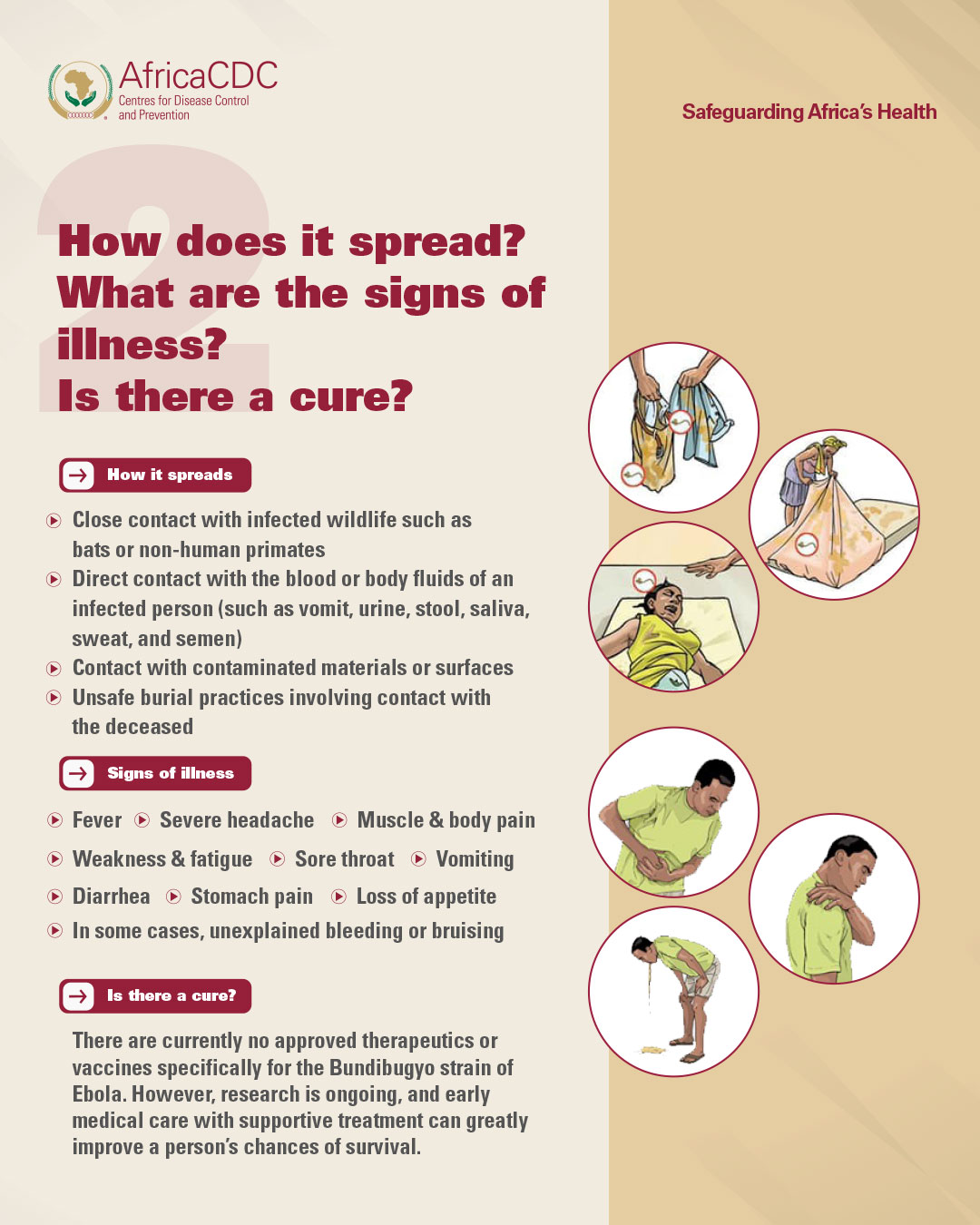
How does it spread?
Close contact with infected wildlife such as bats or non-human primates
Direct contact with the blood or body fluids of an infected person (such as vomit, urine, stool, saliva, sweat, and semen)
Contact with contaminated materials or surfaces
Unsafe burial practices involving contact with the deceased
Signs of illness
Fever
Severe headache
Muscle & body pain
Weakness & fatigue
Sore throat
Vomiting
Diarrhea
Stomach pain
Loss of appetite
In some cases, unexplained bleeding or bruising
Is there a cure?
There are currently no approved therapeutics or vaccines specifically for the Bundibugyo strain of Ebola. However, research is ongoing, and early medical care with supportive treatment can greatly improve a person’s chances of survival.
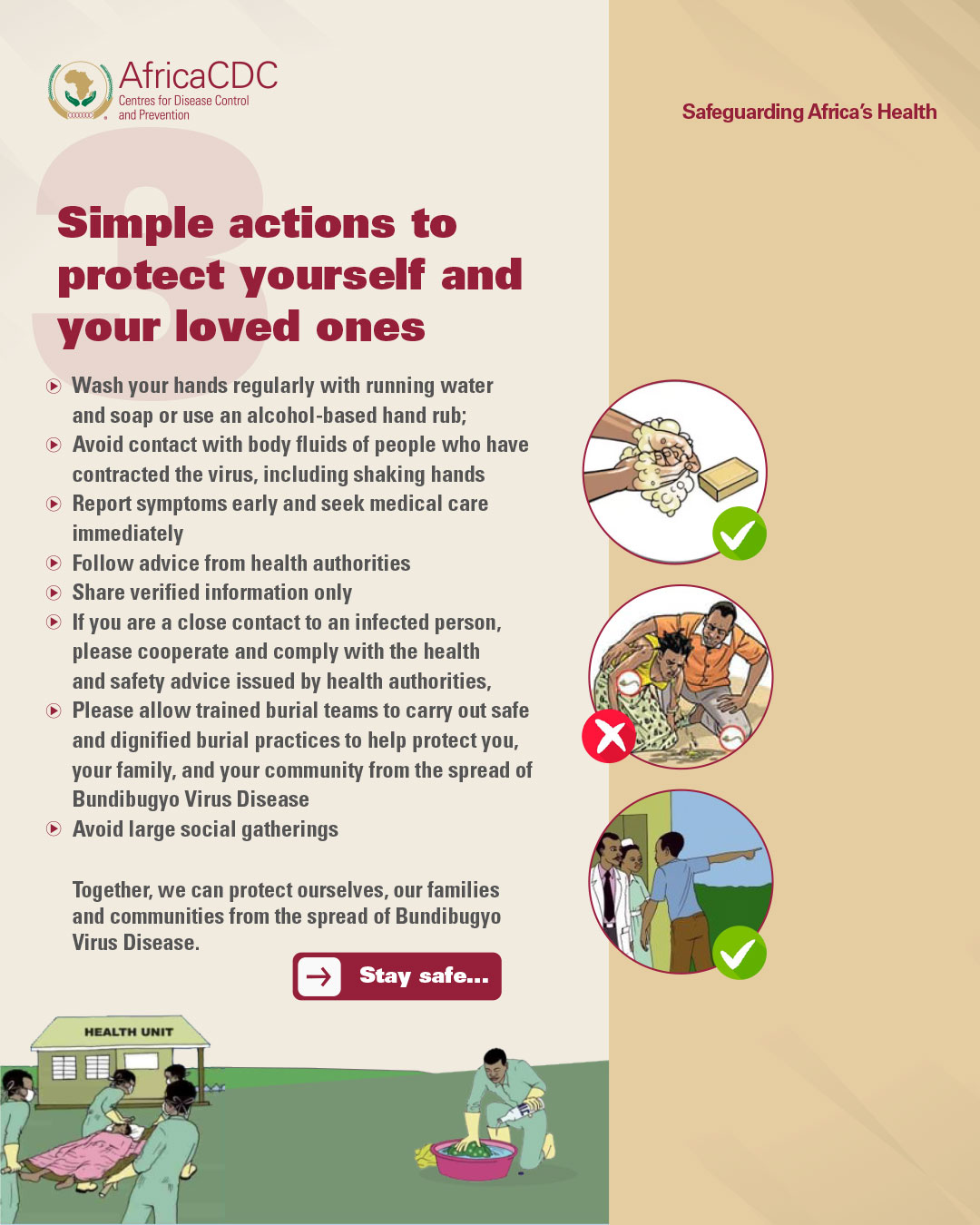
Simple actions to protect yourself and your loved ones
Wash your hands regularly with running water and soap or use an alcohol-based hand rub;
Avoid contact with body fluids of people who have contracted the virus, including shaking hands
Report symptoms early and seek medical care immediately
Follow advice from health authorities
Share verified information only
If you are a close contact to an infected person, please cooperate and comply with the health and safety advice issued by health authorities,
Please allow trained burial teams to carry out safe and dignified burial practices to help protect you, your family, and your community from the spread of Bundibugyo Virus Disease
Avoid large social gatherings
Together, we can protect ourselves, our familiesand communities from the spread of Bundibugyo Virus Disease.
We use cookies to ensure that we give you the best experience on our website. If you continue to use this site we will assume that you are happy with it.