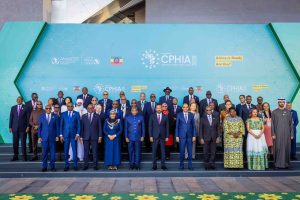
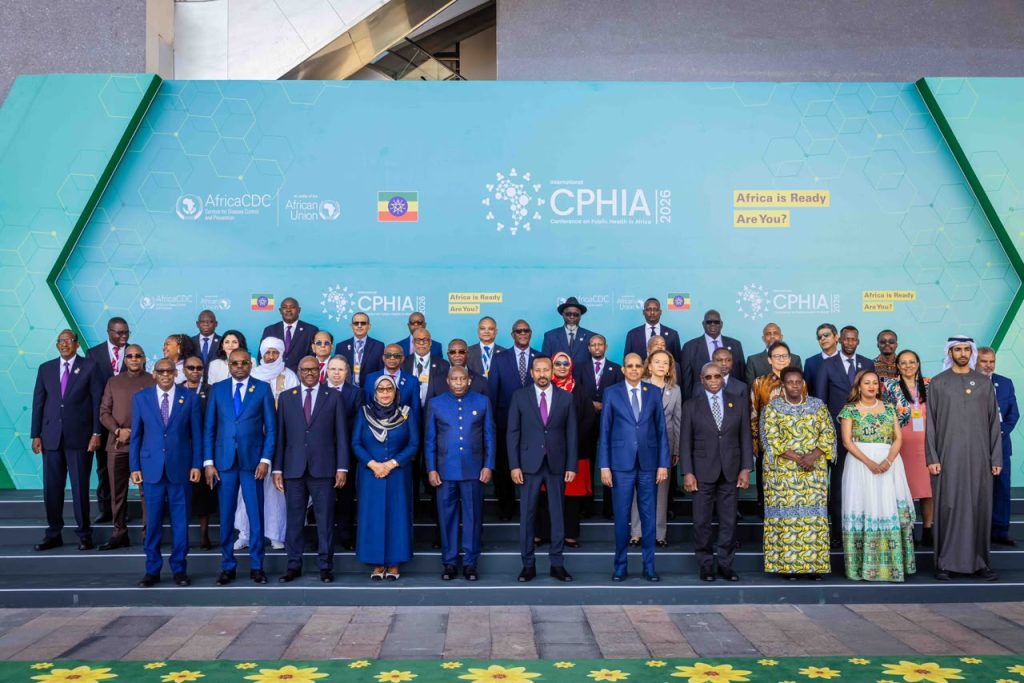
The continent’s largest-ever public health gathering brought together Heads of State, all seven candidates for WHO Director-General and 29,000 participants from 135 countries, as governments committed new resources to health sovereignty and pledged to report back on delivery.
Addis Ababa, 27 November 2026 – A commitment to prioritise the recovery of Sudan’s war-affected health system, new domestic financing pledges, expanded pooled procurement agreements and investments in local manufacturing were among the key outcomes of the Fifth International Conference on Public Health in Africa (CPHIA 2026), which concluded today in Addis Ababa.
Co-hosted by the Africa Centres for Disease Control and Prevention (Africa CDC) and the Government of Ethiopia, the five-day conference outlined practical steps to reduce Africa’s dependence on external assistance, strengthen national health systems and increase the continent’s influence in global health governance.
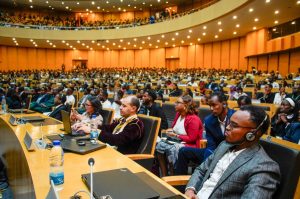
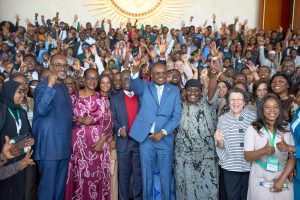
Over five days, 29,000 participants attended in person at the Addis International Convention Centre, and another 270,000 joined online from 135 countries. Delegates included 6 Heads of State and Government, 63 ministers, scientists, health workers, manufacturers, civil society, community leaders, young people and journalists. Five years after its first edition drew 2,500 participants online, CPHIA has become one of the largest public health conferences in the world.
CPHIA 2026 convened as external health assistance declines and outbreaks, including the Ebola Bundibugyo outbreak in the Democratic Republic of Congo, continue to test the continent’s health systems.
Under the theme “Africa’s Health Security and Sovereignty: Transformation from health dependency and vulnerability to ownership and resilience”, governments and partners moved from shared ambition to specific commitments on financing, manufacturing, preparedness and digital health.
With Africa accounting for the largest number of disease outbreaks, Member States agreed to establish integrated climate-health early warning systems with predefined response triggers and contingency financing. Amid a rise in zoonotic infections – such as mpox, Ebola and Marburg – they also committed to institutionalising One Health coordination through shared laboratory infrastructure, genomic surveillance and cross-border data sharing.
A year ahead of COP32 to be hosted by Ethiopia, Member States also resolved to pursue direct, grant-based climate adaptation financing for health ministries and develop a unified African negotiating position.
Rebuilding Sudan’s health system emerged as a continental priority, with calls to restore essential services, protect health workers and rebuild disease surveillance despite the ongoing conflict. Health Minister Dr Haitham Mohammed Ibrahim appealed for support to close an annual funding gap of at least US$700 million over the next three years.
Africa CDC reaffirmed its support for Sudan’s efforts to set up a functional emergency operations centre, rebuild laboratory and genomic sequencing capacity, and strengthen its health workforce.
Africa sets the terms of the conversation
The presidential dialogue brought together Heads of State and Government to set out how African governments will lead the shift from dependency to ownership.
For the first time, all seven candidates seeking to become the next Director-General of the World Health Organization came to an African platform to engage the continent’s leaders on their vision for global health governance and Africa’s priorities. The session marked a shift in how Africa engages with global health governance: as a constituency that shapes the agenda, not one that waits to receive it.
Key outcomes
With external health assistance falling, financing dominated deliberations as governments set out how they will mobilise domestic resources, make better spending decisions and protect essential services.
The Central African Republic committed to raise health’s share of its national budget from about 4% in 2026 to 10% by 2029, with expenditure reported every quarter.
Ghana announced a US$1 billion investment over four years in pharmaceutical and biomanufacturing hubs. Sudan, South Sudan and Botswana signed the African Pooled Procurement Mechanism agreement, and Zimbabwe is completing its national processes to join. Five Southern African Development Community countries joined regional pooled procurement, which is projected to save an estimated US$200 million.
Zambia broke ground on a cholera vaccine manufacturing facility, with fill-and-finish operations targeted within a year. Ghana authorised direct procurement of locally produced snake antivenom. Africa CDC and the African Medicines Agency will submit a continental quality assurance policy to the African Union in early 2027.
With the Ebola Bundibugyo outbreak ongoing, Gavi announced an advance purchase commitment for up to 1.5 million doses of a Bundibugyo Ebola vaccine, conditional on Phase 3 trial results. The revised continental Ebola response plan requires an estimated US$1.576 billion over six months; the World Bank will lead its socio-economic protection component.
Africa CDC also released the first continental public health intelligence report, which links data analysis to operational action, and launched a health law consortium with CEPI to help countries remove legal and regulatory barriers to emergency preparedness and response.
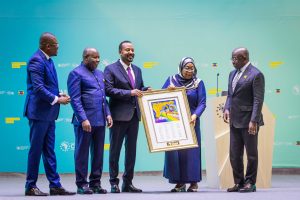
Tanzanian President H.E. Samia Suluhu Hassan launched a continental roadmap targeting zero home deliveries, zero preventable maternal and newborn deaths and zero unvaccinated children, and Tanzania pledged 60 specialist scholarships. The Beginnings Fund announced US$665 million for maternal and newborn health across 14 African countries.
Ethiopian Prime Minister H.E. Dr Abiy Ahmed launched a continental roadmap on artificial intelligence and digital health, and announced plans for an AI university in Ethiopia open to students from across Africa. The new Africa Health Atlas provides standardised, comparable health indicators for all 54 African countries to guide national planning and investment.
Accountability ran through the conference. Africa CDC launched a mechanism to monitor implementation of the Lusaka Agenda, and Zambia committed to report on its progress at the next CPHIA. The UN Economic Commission for Africa offered technical support to countries restructuring their health budgets. Leaders called on governments and partners to align behind “one plan, one budget, one report”.
Delegates agreed that the next conference with will review what has been delivered: resources mobilised, budgets executed, and measurable improvements in health services.
– ENDS –
Notes to editors
- The full CPHIA 2026 conference outcomes report, with all commitments and announcements, is attached / available at The Addis Commitments – Africa CDC.
###
About Africa CDC
The Africa Centres for Disease Control and Prevention (Africa CDC) is the African Union’s autonomous public health agency. Established in 2016 and launched in 2017, it works with Member States to strengthen public health systems and improve disease prevention, preparedness and emergency response. Headquartered in Addis Ababa, it operates through five Regional Coordinating Centres. For more information, visit: http://www.africacdc.org and follow Africa CDC on LinkedIn, X, Facebook, and YouTube.
Media enquiries: Directorate of Communications and Public Information, Africa CDC | Email: communications@africacdc.org