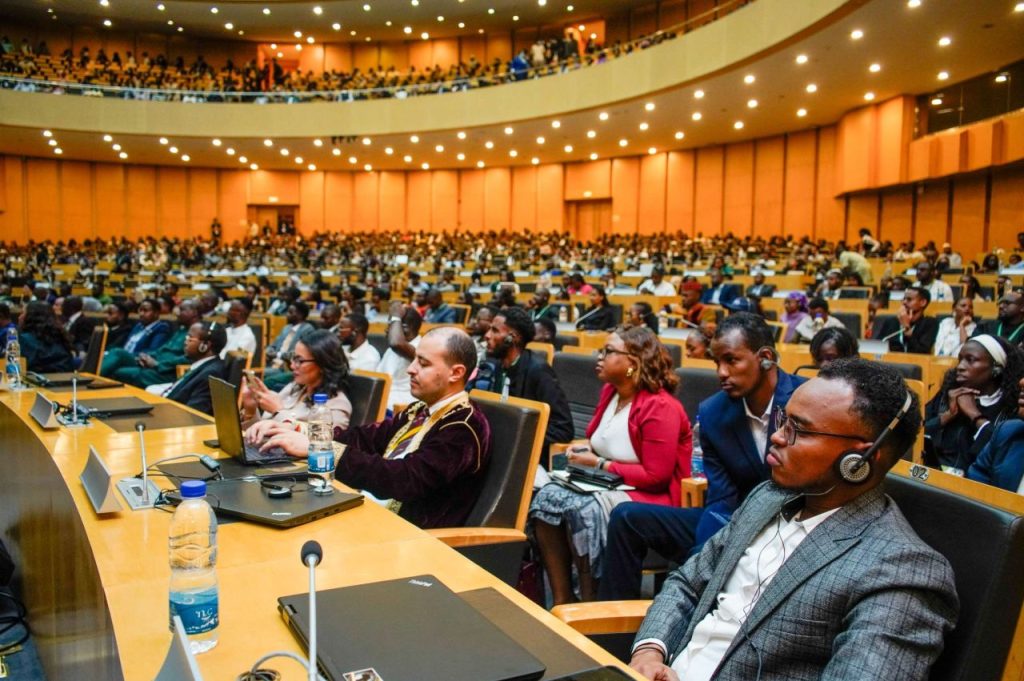
The Summit brought young people and women leaders to the main stage, turned their priorities into commitments, and launched Africa CDC’s continental report on adolescent health.
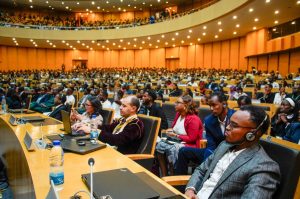
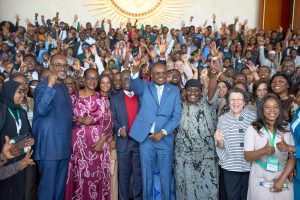
ADDIS ABABA, Ethiopia, 23 November 2026: Young people and women leaders from across the continent took the main stage at the African Union Commission headquarters on Nov. 22 for the first-ever Africa CDC Youth Pre-Conference and Women in Health Leadership Summit, a pre-event of the Conference on Public Health in Africa (CPHIA 2026). Their message was direct: Africa cannot achieve health sovereignty while the people who carry its health systems are absent from the rooms where those systems are designed and funded.
Since 2022, young people have gathered at the margins of CPHIA. This year, at the direction of Africa CDC Director General H.E. Dr. Jean Kaseya, Africa CDC’s Youth Division and its Reproductive, Maternal, Newborn, Child and Adolescent Health and Sexual and Reproductive Health and Rights Division came together to co-create a single summit with one agenda and one voice for young people and women. Women make up about 70 percent of Africa’s health workforce, and adolescents aged 10 to 19 make up about one in four Africans, yet both remain largely outside health leadership and budget decisions.
“Africa’s youth and women do not need permission to lead. They need the room, the genuine support, the budget and the seat they so rightfully deserve,” said H.E. Dr. Jean Kaseya, Director General of Africa CDC.
High-level leadership in the room
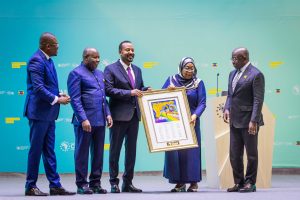
The Summit was guided by the leadership of H.E. Dr. Jean Kaseya, Director General of Africa CDC, and H.E. Dr. Samia Suluhu Hassan, President of the United Republic of Tanzania and African Union Champion for Maternal, Newborn and Child Health, represented by Hon. Ummy Mwalimu, Head of the AU Champion’s Secretariat. It also recognised the leadership of H.E. President Cyril Ramaphosa, Chair of the Global Leaders Network, represented by the Head of Secretariat, Dr. Lwazi Manzi.
It was also addressed by H.E. Dr. Specioza Kazibwe, former Vice President of the Republic of Uganda and Presidential Advisor on Community Engagement. They were joined by government representatives, youth champions, women leaders, development partners, investors and civil society.
“Today, young people sat on the main stage, set our priorities and watched institutions sign their names to real commitments. This declaration is ours now, and we will hold every signatory to it, at CPHIA and every year after,” said Ms. Ivy Nduta Mureith, Youth Champion.
From voice to commitments
The Summit was designed to produce commitments, not communiqués. A high-level panel on sustainable health financing for women, adolescents and youth brought together the World Bank, Global Leaders Network, UNFPA, UNICEF, the AHF, ECSA, Pathfinder International and Africa CDC, with each panellist asked to close on one concrete commitment. Five parallel tracks then worked through practical actions on sexual and reproductive health, HIV and adolescent mental health; workforce and leadership pipelines; digital health innovation and research; One Health and emergency preparedness and response; and local manufacturing of health products. Each track agreed on three priority actions, with named leads and timelines.
Global Leaders Network, AHF Global Public Health Institute, Norway Public Health Institute and Pathfinder announced their pledges and signed a public Commitments Register. Their commitments include supporting implementation of the African Union Champion’s Roadmap for Reproductive, Maternal, Newborn, Child and Adolescent Health 2026–2030, creating space for more meaningful youth engagement, and ensuring that the priorities of women, children and adolescents are prioritised and reflected in key global health architecture reform processes and fora. The Summit closed with the adoption of a Joint Leadership Declaration, which will be carried to CPHIA 2026. Africa CDC will report publicly on progress against these commitments.
Spotlight: “Seen, Served and Counted”
The Summit also saw the launch of Seen, Served and Counted: The State of Adolescent Health in African Union Member States, drawing on data from the Ministries of Health of all 55 AU Member States. It finds that Africa does not lack policies for its adolescents; it lacks their delivery. Only 12.9% of health facilities offered youth-friendly services in 2025, almost unchanged since 2021. Adolescent girls account for 16.5% of all pregnancies, rising to 24.2% in Southern Africa, and pregnancies among girls aged 10 to 14 appear largely hidden from the data. Sixty percent of countries cannot say what they spend on adolescent sexual and reproductive health. Yet progress is possible: modern contraceptive use among girls aged 15 to 19 rose from 14.0 to 17.1 per 100 between 2021 and 2025.
The report sets out seven recommendations, including adolescent-friendly service standards in every primary health care facility, removing consent and confidentiality barriers, treating every pregnancy among girls aged 10 to 14 as a child protection case, and tracking adolescent health spending in national budgets. In her foreword, President Samia Suluhu Hassan asks every Member State to adopt the seven recommendations, report adolescent data in full and by age group, and protect domestic financing for these services.
With thanks to our partners
The Africa CDC Youth Pre-Conference and Women in Health Leadership Summit was made possible by the financial contributions of the AU Champion Secretariat for Maternal and Child Health, the Global Leaders Network, UNFPA, UNICEF, WHO, the World Bank, the AHF Global Public Health Institute, ECSA Health Community and Pathfinder International. Africa CDC thanks them, together with the African Union Commission and the Government of Ethiopia, for their partnership.
Notes to editors
About the Summit: The Africa CDC Youth Pre-Conference and Women in Health Leadership Summit was held on 22 November 2026 in Mandela Hall, African Union Commission headquarters, Addis Ababa, as a pre-event of CPHIA 2026. Its theme was “From voice to investment: women, adolescents and youth at the centre of Africa’s health sovereignty.”
About the report: Seen, Served and Counted is based on a structured questionnaire completed in 2026 by the Ministries of Health of all 55 AU Member States, covering 2021 to 2025.
Media enquiries: Africa CDC Communications, communications@africacdc.org