“Seen, Served and Counted”, a continental assessment of adolescent health drawing on data from the Ministries of Health of all 55 African Union Member States, was launched at the Africa CDC Youth Pre-Conference and Women in Health Leadership Summit
ADDIS ABABA, Ethiopia, 22 November 2026 – Africa’s health systems are failing to reach the continent’s 10- to 19-year-olds, not for lack of policy but for lack of delivery, financing and data. That is the finding of Seen, Served and Counted: The State of Adolescent Health in African Union Member States, launched today by the Africa Centres for Disease Control and Prevention (Africa CDC).
In the countries able to report, pregnancies among girls aged 10 to 19 make up 16.5% of all pregnancies, rising to 24.2% in Southern Africa, almost one in four. Five years of effort have moved that share only slightly, from 17.9% in 2021. Yet only 12.9% of health facilities offered adolescent- and youth-friendly services in 2025, with almost no change since 2021.
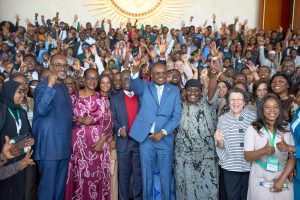
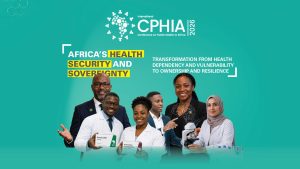
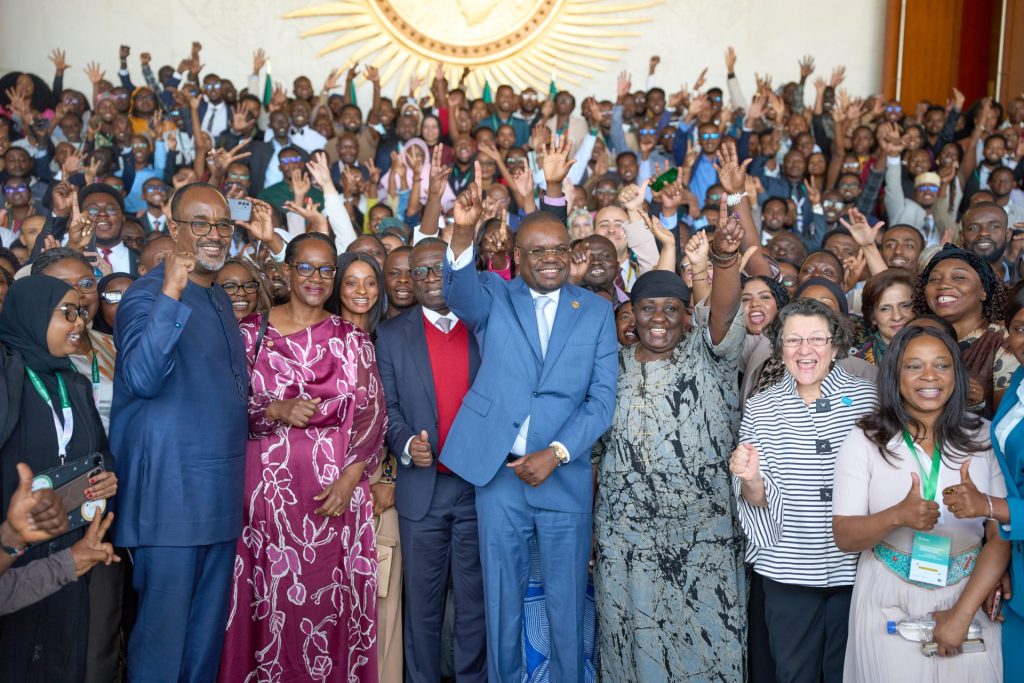
The report was launched in Mandela Hall at the African Union Commission headquarters, at Youth Pre-Conference and Women in Health Leadership Summit, a pre-event of the Conference on Public Health in Africa (CPHIA 2026). The Summit brought together more than 2500 young people, women leaders, Ministers of Health, African Union institutions and development partners around a single goal: moving women and youth from the margins to the centre of Africa’s health sovereignty.
Key results at a glance
Africa does not lack policies for its adolescents; it lacks their delivery. Adolescent sexual and reproductive health is in the national policies of 83% of responding countries, but comprehensive sexuality education reaches only 60%, and only 12.9% of health facilities offered youth-friendly services in 2025, almost unchanged since 2021. Adolescent girls account for 16.5% of all pregnancies (24.2% in Southern Africa), down only slightly from 17.9% in 2021, while pregnancies among girls aged 10 to 14 appear largely hidden, at 1.8% of recorded adolescent pregnancies against a WHO estimate of 5.2%. Almost one country in four has no confidentiality protections for adolescents, 60% cannot say what they spend on adolescent sexual and reproductive health, and 37% do not break their data down by age. Countries named insufficient funding (73%), workforce shortages (71%) and weak data systems (63%) as their main barriers. Yet progress is possible: modern contraceptive use among girls aged 15 to 19 rose from 14.0 to 17.1 per 100, and early postnatal care rose from 57% to about 62% of mothers.
Seven recommendations
The report calls on Member States, supported by the African Union, Africa CDC and partners, to: integrate adolescent-friendly service standards into all primary health care facilities, with national targets and annual reporting; remove consent and confidentiality barriers to adolescent services; expand access to contraception, including after pregnancy and delivery; treat every pregnancy among girls aged 10 to 14 as a child protection case, with action on child marriage and keeping girls in school; track adolescent sexual and reproductive health spending in national budgets and National Health Accounts; break routine data down by age and sex and monitor the adolescent birth rate; and repeat the continental assessment with standard indicators and validated country data so that progress can be tracked reliably.
What leaders said
“What we cannot measure, we cannot manage, and what we cannot show, we cannot finance. Our task is in the title of this report: to build health systems that see our adolescents, serve them and count them,” said H.E. Dr. Jean Kaseya, Director General, Africa CDC.
“I do not believe our youngest girls are safer than we thought. I believe they are hidden. A girl who is not counted is a girl who is not planned for, and a girl who is not planned for is a girl who is left behind,” said H.E. Dr. Samia Suluhu Hassan, President of the United Republic of Tanzania and African Union Champion for Maternal and Child Health, in her foreword to the report.
“This report puts in numbers what young people across Africa already know: the clinic down the road was not built for us. We do not need more promises. We need services we can walk into without fear, budgets that can be seen, and a seat where the decisions are made. Today, we asked for all three,” said Ms. Ivy Nduta Mureith, Youth Champion.
From evidence to commitments
The Summit was designed to produce commitments, not communiqués. A high-level panel on sustainable health financing brought together the World Bank, UNFPA, UNICEF, the Global Leaders Network, AHF Global Public Health Institute, Pathfinder International and Africa CDC. Five parallel tracks set out practical actions on sexual and reproductive health, HIV and adolescent mental health; workforce and leadership pipelines; digital health innovation; One Health and emergency preparedness; and local manufacturing of health products.
Institutions signed a public Commitments Register, and delegates adopted a Joint Leadership Declaration, read by a young person, for presentation to CPHIA 2026. Africa CDC has committed to support Member States in acting on the report’s recommendations, and to repeat the assessment so that the next report measures progress rather than estimates it.
###
Notes to editors
About the report. Seen, Served and Counted draws on a structured questionnaire completed in 2026 by the Ministries of Health of all 55 African Union Member States, covering policy, financing, monitoring and annual service data for 2021 to 2025, analysed by Africa CDC’s Reproductive, Maternal, Newborn, Child and Adolescent Health/SRH Division. Figures for some indicators are based on the countries able to report complete data, as set out in the report.
About the Summit. The Africa CDC Youth Pre-Conference and Women in Health Leadership Summit was co-created by Africa CDC’s Youth Division and its RMNCAH/SRHR Division, and held on 22 November 2026 as a pre-event of CPHIA 2026, with support from the AU Champion Secretariat for Maternal and Child Health, UNFPA, the Global Leaders Network, the World Bank, the AHF Global Public Health Institute, Pathfinder International, UNICEF and an anonymous funder.
Media enquiries: Africa CDC Communications, communications@africacdc.org