Statement of Africa CDC on the Health Policy Watch article of 16 November 2026
Addis Ababa, 17 November 2026. Africa CDC rejects the article published by Health Policy Watch on 16 November 2026. It is built on manipulation by anonymous sources, contains factual errors, and ignores the official records that Africa CDC gave its author before publication. Africa CDC regards it as a politically motivated attack on an African institution and an African leader.
Africa CDC belongs to Africa. An autonomous institution of the African Union since February 2022, it is governed by a Statute adopted by Member States. It answers to the Chairperson of the AU Commission on administrative and financial matters, to its Governing Board, to the Committee of Heads of State and Government (CHSG) and to the AU Assembly.
Africa CDC is dismayed by the conduct of the author, who requested answers and documents late last week and then disregarded them; by the hostility of the language used against Africa CDC and its Director General; by the distortion of the facts; and by the readiness to impose a personal opinion and leadership of AU institution on Africa, its institutions and its leaders.
An institution attacked at the moment Africa needs it most
Africa CDC is leading the continental response to Ebola and other public health threats. It expects criticism and answers fair criticism. Anonymous allegations relayed by politically motivated journalists and their sponsors are different: they aim to weaken an African institution in the middle of an outbreak. For too long, others presumed to decide who may lead Africa’s institutions and how they should be judged. That paternalism has no place in 2026. Africa’s Member States are the judges of Africa CDC, and they have spoken through their organs.
Point by point, here are the facts, and what the article did with them to become politically motivated
1. A suspension of the Director General that never happened
The fact. The Director General has never been suspended, sanctioned or placed on leave since taking office in April 2023. Under Rules 73 to 75 of the AU Staff Regulations and Rules, suspending an elected official requires formal charges, due process, a written decision and an acting appointment. None exists, because no such proceedings ever took place. The author seems to portray the AU as a lawless institution where female diplomats can allegedly be threatened without any appropriate administrative or disciplinary action being taken, while the DG concerned is simultaneously awarded an “Outstanding Performance” rating through a formal performance evaluation by the chairperson of AU Commission. Such a portrayal is not only an affront to the AU’s institutions and established procedures, but also deeply disrespectful to its leadership and the people who serve it.
What the article did. The author said that Africa CDC denied the claim in writing before publication, cited the rules and asked the author for the decision relied upon. The article repeats the claim and produces no decision. It then takes the “Outstanding Performance” rating given in April 2026 by the Chairperson of the AU Commission, the statutory supervisor of Africa CDC, and presents it seven months later, days before the Governing Board meets, as a manoeuvre for renewal. The author appears to want Africa CDC led by weak leaders, as if to confirm that Africans cannot run a continental agency. The Director General will not apologise for being excellent in his work. This is the mark of a politically motivated article, and an offence to the African Union, its rules and its leaders.
2. The Director General’s renewal belongs to Africa’s organs
The fact. The renewal is governed by the Africa CDC Statute and is a matter for the Governing Board, the CHSG and the AU Assembly alone. The Director General does not choose the Board nor members of CHSG: these are Heads of State and Ministers of Health nominated by their Regions.
What the article did. Publication days before the Governing Board meets is no coincidence. It is a disrespectful attempt to influence a statutory process from outside the institutions that own it, and that is what makes the article politically motivated. The African Union does not act on diktat from Western journalists. It acts on its Statute.
3. Staffing: an institution people join, not one they flee
The fact. Africa CDC grew from 262 staff in 2023 to 620 in 2026: 358 additional colleagues, a 137% increase in three years, while global health institutions were cutting posts. Over the same period only 7 senior staff (P5 and above) resigned, less than 5% a year, while 18 others at the same level were recruited. All recruitment follows the AU Staff Regulations and Rules.
- Member States represented among staff rose from 21 to 49 of 55, the best record of any AU organ after the AU Commission.
- Women in posts at P5 and above rose from 11% to 38%.
- Member States fund only 37 of the 155 approved posts. Africa CDC raised partner funding for the other 583 positions, at no additional charge to Member States.
What the article did. The author received these figures and the official reports behind them, and chose to write about 14 departures, for ordinary reasons such as better opportunities, family or health, as if Africa CDC were the only institution in the world that people ever leave. The doubling of Member State representation and the rise of women in senior posts were left out. That is how a politically motivated article treats evidence that does not serve its purpose or its sponsors.
4. Regional directors: a decision of the Chairperson, respected in full
The fact. The redeployment of the three Regional Directors was decided by the Chairperson of the AU Commission, who exercises supervisory authority over Africa CDC under Article 8ter of the Statute. He acted on established facts, under the powers conferred on him by the AU Staff Regulations and Rules. The decision preserved rank, salary and benefits.
What the article did. It attributes to the Director General a decision that bears the signature of the Chairperson. A change of duty station, common practice in international organisations, is made to look like a sanction. Only a politically motivated article would contest the statutory authority of the Chairperson in order to reach the Director General.
5. Audit: the highest opinion, hidden behind a headline
The fact. The headline speaks of “adverse audit findings”. In May 2026 the AU Board of External Auditors gave Africa CDC’s 2025 financial statements an unmodified (unqualified) opinion, the highest category an auditor can give. Africa CDC is among the most audited institutions on the continent and welcomes it: 10 audits in 2025 alone. Like every audit, these made recommendations, on bank reconciliation, internal oversight and travel, which Africa CDC accepted and is implementing. The US$23 million in reconciliation items, which pre-date Africa CDC’s autonomy, have since been reconciled. Africa CDC established its own Office of Internal Oversight in 2025, passed the pillar assessments of the United Kingdom, Gavi, Unitaid and the Pandemic Fund, and was congratulated by the World Bank on its management of a US$100 million grant.
What the article did. It put “adverse” in the headline and left the unqualified opinion out of the story. It quoted US$23 million without saying the amounts were reconciled. It was silent on 10 audits in one year. When an African institution manages money to the highest standard, a politically motivated article has no use for that fact, so the fact disappears.
6. Travel
The fact. Africa faces an average of 200 disease outbreaks a year, and Africa CDC deploys wherever Member States call. About 88% of the 2025 travel budget went to emergency response and Member State capacity building. Entitlements are set by the AU Staff Regulations and Rules. The audit made no finding on the entitlements of the Director General or of staff. It identified late bookings and weak ticket tracking; Africa CDC now tracks unused tickets and refunds and is tightening compliance.
What the article did. It presents travel as indulgence, without regard for the countries struck by outbreaks. It does not tell readers that nearly nine dollars in ten paid for emergency response and capacity building, nor that the auditors found nothing against the Director General’s entitlements. A politically motivated article needs insinuation, so it leaves out the finding.
7. Budget
The fact. The article sets a grant portfolio of US$463 million beside a year-end cash balance of US$52.9 million, as if one should equal the other. A portfolio is the total value of grant agreements, including multi-year commitments. A cash balance is the money held on a single date. Neither is annual revenue or spending.
What the article did. It invited readers to suspect a gap that any first-year student of accounting knows does not exist. Made with the correct figures in hand, the comparison serves only the politically motivated purpose of the article.
8. CPHIA 2026
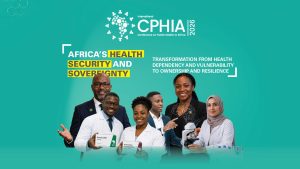
The fact. The Conference on Public Health in Africa is co-organised by the Government of Ethiopia, the African Union, Africa CDC and Ethiopian Airlines under a signed host agreement. The first edition, in 2021, drew 2,500 participants. By 17 November 2026, one week before the fifth opens, 39,069 people from 129 countries had registered. It is financed by host-country contributions, Ethiopian Airlines sponsorship, registration and exhibition fees, institutional resources and in-kind support; partners sponsor side events. Ethiopia’s contribution is the sovereign decision of a responsible Member State. An audited report will go to Member States.
What the article did. It turned a scientific conference, which has nothing to do with the appointment of a Director General, into a weapon in a debate about leadership. Nobody objects when African leaders fly to other continents to discuss Africa’s health. When an African country, the African Union, Africa CDC and an African airline host a world-class event at home, the questions begin. That double standard is the signature of a politically motivated article. Africa CDC will not apologise for a world-class event that brings African leaders together in Africa to discuss African issues. Who decided that Africans must always do things on the cheap?
The record the article left out
The author received policies, documents and decisions of the AU policy organs. These are the results the politically motivated article kept from its readers:
- Institutional turnaround. The directly managed grant portfolio grew from US$52 million to US$463 million, and funders from 7 to 44. Partners do not multiply commitments to an institution whose governance they doubt.
- Health security. Africa CDC made the first continental emergency declarations, set up the joint Africa CDC–WHO Incident Management Support Team, operationalised the Africa Epidemics Fund and now leads 48 continental research projects, from none before.
- Health sovereignty. Local manufacturing, the African Pooled Procurement Mechanism and the digital health agenda are moving from declarations to delivery, so that Africa never again waits at the back of the queue as it did during COVID-19.
- Global standing. Africa CDC represents the world’s regional health organisations on the WHO Task Force on Global Health Architecture Reform. Africa is becoming a co-architect of global health, not only a beneficiary.
This is the institution the article asks its readers to distrust. Africa CDC belongs to Africa. It was not given to this continent by a politically motivated Western journalist or by the sponsors behind the article. Its staff are sons and daughters of 49 African nations, and many are in the field today against Ebola and other diseases.
Africa CDC will not be diverted by politically motivated journalists and their sponsors. It will defend its institution, its staff and its mandate, and keep protecting the health of 1.4 billion Africans. As Director General Kaseya has declared: “The future of Africa’s health security will be decided in Africa, by Africans, according to Africa’s own rules, with support from partners.”
Media enquiries: Directorate of Communications and Public Information, Africa CDC | Email: communications@africacdc.org | Tél. : +251 984 346 488