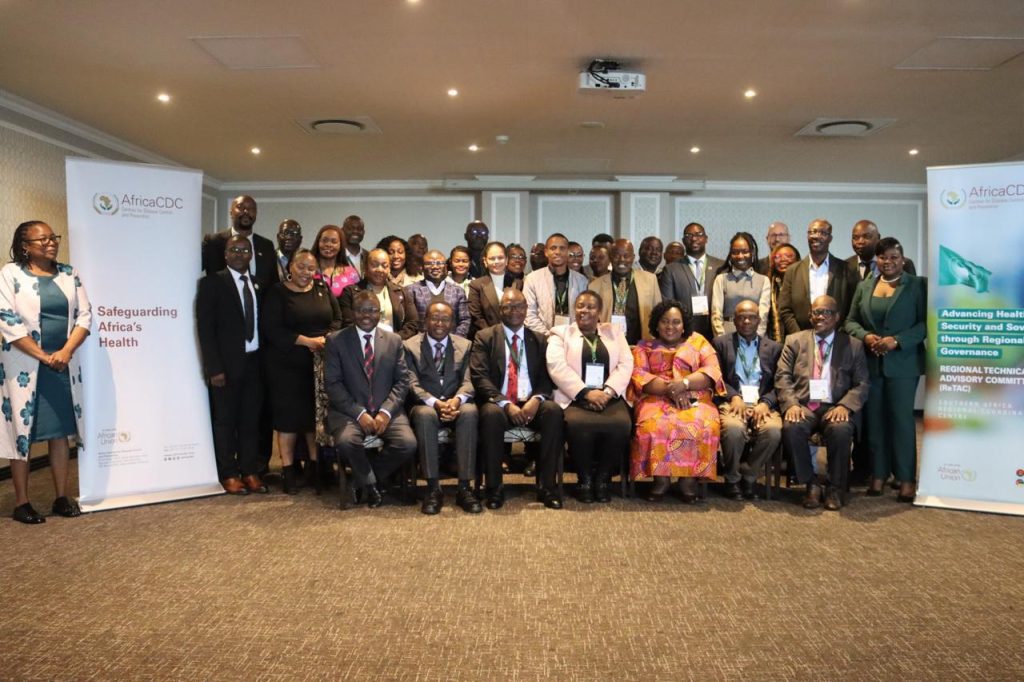
Cape Town, South Africa 20 May 2026 – The Africa CDC Southern Africa Regional Coordinating Centre (SA-RCC), has renewed commitments from Member States and partners to continue strengthening regional preparedness, response capacities, resilient health systems, and collective action towards achieving health security and sovereignty across Southern Africa.
Under the theme: “Advancing Health Security and Sovereignty through Regional Health Governance,” the SA-RCC and South Africa’s National Department of Health convened the 12th Southern Africa Regional Technical Advisory Committee (ReTAC) meeting. The event took place from 11–13 May 2026 in Cape Town, South Africa.
“The Southern Africa region continues to demonstrate strong leadership and solidarity in addressing public health threats. Advancing health security and sovereignty requires sustained collaboration, coordinated governance, and shared responsibility among all stakeholders,” said Dr Mathew Kagoli, ReTAC Chairperson, Malawi.
The Committee agreed on key recommendations and action points to guide SA-RCC strategic priorities and regional collaboration efforts for 2026. These included the proposed establishment of a Strategic Advisory Committee on Climate and Health to strengthen regional coordination and provide technical guidance on climate-related public health threats. ASouthern Africa Technical Working Group for International Health Regulations Focal Points to enhance preparedness, coordination, and compliance across Member States will be set up this year.
In addition, the committee recommended development of sustainable strategies for domestic health financing to support health security and sovereignty initiatives and during this period operationalization of the Continental Immunization Strategy Road Map within the Southern Africa region would be accelerated.
Dr Paul Ngwakum, Regional Health Adviser at UNICEF’s Eastern and Southern Africa Regional Office (ESARO), emphasized the importance of ensuring that vulnerable populations remain central to regional health priorities. “Africa Health Sovereignty will not be achieved if we leave out mothers and children,” he said.
A considerable focus of the meeting was on the Africa Health Security and Sovereignty Agenda (AHSSA), which aims to strengthen Africa’s capacity to prevent, detect, and respond to public health threats while promoting self-reliance and sustainable health systems.
Apart from outlining targets for 2026, the Technical Advisory Committee reviewed progress made since the previous ReTAC and Extraordinary ReTAC meetings. Ms Tsakani Furumele, committee representative of Republic of South Africa and the inaugural ReTAC Chairperson, who has served the committee with distinction since 2021 was bade farewell at the meeting. Ms Furumele’s outstanding leadership, dedication, and contribution steered establishing and strengthening the Committee during its formative years.
Representatives from 10 Southern African Member States, regional public health institutions, technical experts, and partners including WHO, UNICEF, African Field Epidemiology Network, AMREF Health Africa, UK Health Security Agency, Southern African Development Community, Common Market for Eastern and Southern Africa, academia, and private sector stakeholders attended the 12th ReTAC meeting.
###
About ReTAC
The Regional Technical Advisory Committee (ReTAC) serves as a strategic advisory platform providing technical guidance and support to the Africa CDC Southern Africa Regional Coordinating Centre on regional public health priorities, preparedness, response, and health systems strengthening initiatives.
About Africa CDC
The Africa Centres for Disease Control and Prevention (Africa CDC) is the public health agency of the African Union. As an autonomous institution, Africa CDC supports AU Member States to strengthen health systems, improve disease surveillance, and enhance emergency preparedness and response. For more information, visit: http://www.africacdc.org and follow Africa CDC on LinkedIn, X, Facebook, and YouTube.
Media Contact:
Directorate of Communication & Public Information | Communications@africacdc.org