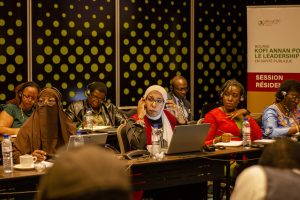

Survey will reach approximately 10,000 pregnant women across all 10 regions, generating evidence to strengthen maternal and newborn health services
Yaoundé, Cameroon – 30 July 2026: The Government of Cameroon and the Africa Centres for Disease Control and Prevention (Africa CDC), with support from the Korea International Cooperation Agency (KOICA), have taken an important step towards implementing Cameroon’s first nationally representative seroprevalence survey of hepatitis B and C among pregnant women.
Laboratory commodities for the survey were handed over in Yaoundé following specialized training for laboratory personnel. The survey will involve approximately 10,000 pregnant women across all 10 regions of Cameroon.
It will generate the first nationally representative evidence on viral hepatitis among pregnant women in the country, helping Cameroon strengthen prevention, improve maternal and newborn health services and accelerate the elimination of mother-to-child transmission of hepatitis B.
The initiative also reflects a broader investment in stronger laboratories, surveillance and primary health care systems capable of addressing both long-term health challenges and future public health emergencies.
Despite being preventable and treatable, hepatitis B and C remain major causes of illness and death across Africa. More than 64 million people on the continent live with chronic hepatitis B, while many remain unaware of their status or do not have access to the care and treatment needed to prevent cirrhosis, liver cancer and other serious complications.
Effective vaccines, diagnostics and treatments are available. The urgent challenge is ensuring that they reach every mother, newborn and community through accessible and resilient health services.
In remarks delivered on behalf of H.E. Dr Jean Kaseya, Director-General of Africa CDC, Dr Landry Dongmo Tsague, Director of the Centre for Primary Health Care, said:
“Today’s handover is not simply the transfer of hepatitis programme commodities. It is an investment in healthier mothers, protected newborns, stronger surveillance and laboratory systems, and more resilient primary health care.
“By strengthening maternal and child health services, community health, digital health and surveillance, Cameroon is building a health system capable not only of eliminating hepatitis but also of responding to current and future public health threats.”
Receiving the commodities on behalf of Dr Manaouda Malachie, Minister of Public Health, the Secretary General of the Ministry of Public Health, Prof. Louis Richard Njock, reaffirmed Cameroon’s commitment to eliminating viral hepatitis.
“This survey will provide the evidence required to strengthen our national response, better protect pregnant women and newborns, and accelerate the elimination of mother-to-child transmission of hepatitis B,” he said.
“Together with Africa CDC and our partners, we are investing in a healthier future for every child born in Cameroon.”
The survey supports implementation of the African Union Triple Elimination Initiative, which aims to eliminate mother-to-child transmission of HIV, syphilis and hepatitis B by 2030 through integrated maternal, newborn and child health services.
Cameroon has made significant progress in recent years by expanding hepatitis B screening among pregnant women, introducing free antiviral prophylaxis for pregnant women who test positive for hepatitis B, rolling out the hepatitis B birth-dose vaccine and expanding access to treatment.
The national survey will provide evidence to further strengthen policies, target investments and improve services for women and children.
The initiative forms part of Africa CDC’s Continental Viral Hepatitis Prevention, Control and Elimination Programme. With support from KOICA, WHO, UNICEF and the World Bank, the programme has helped more than 30 African Union Member States strengthen hepatitis surveillance, laboratory systems, workforce capacity, access to diagnostics and treatment, and national hepatitis programmes.
Africa CDC also continues to support Cameroon in strengthening emergency preparedness and response, community health, digital health, laboratories, and maternal, newborn and child health services.
The collaboration demonstrates how national leadership, reliable evidence and strategic investments can turn continental commitments on hepatitis elimination into measurable improvements for women, newborns and communities.
###
About Africa CDC
The Africa Centres for Disease Control and Prevention is the public health agency of the African Union. As an autonomous institution, Africa CDC supports AU Member States in strengthening health systems, improving disease surveillance, and enhancing emergency preparedness and response. For more information, visit: http://www.africacdc.org and follow Africa CDC on LinkedIn, X, Facebook, and YouTube.
Media enquiries
Africa Centres for Disease Control and Prevention | Email: communications@africacdc.org