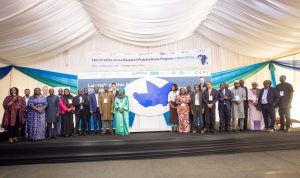

KIGALI, Rwanda, 30 October 2026 – African Union Member States are a step closer to a coordinated response to non-communicable diseases (NCDs), injuries and mental health conditions following the finalisation of a multisectoral action plan at a five-day technical meeting convened by the Africa Centres for Disease Control and Prevention (Africa CDC).
The initiative comes as NCDs account for a growing share of deaths across Africa, claiming an estimated 4.7 million lives in 2023. Earlier this year, figures from South Africa showed that NCDs had overtaken infectious diseases and other communicable, maternal and nutritional conditions as the leading cause of death, reflecting a broader shift in the continent’s disease burden.
Despite this growing challenge, prevention and treatment remain constrained by inadequate financing, limited access to care and fragmented responses to health risks that extend beyond the health sector.
The continental action plan – developed alongside the Multisectoral Engagement, Coordination and Action (MECA) Framework – seeks to translate the African Union (AU) Common Position on NCDs, injuries and mental health into national policies and programmes. It sets out an approach to coordinating government interventions, mobilising sustainable financing, establishing accountability mechanisms and monitoring progress.
Representatives of AU Member States, AU organs, academic institutions, civil society organisations and patient advocates contributed to the process, with a focus on country-led implementation that reflects national priorities and shared continental objectives.
“The AU Common Position recognises the important role of civil society and people with lived experience. Their meaningful participation is essential in developing national multisectoral action plans that reflect country priorities,” said Dr Mohammed Abdulaziz, Head of Division at Africa CDC.
The MECA Framework responds to the need for closer coordination between the health sector and other areas of government whose policies influence the prevention and management of NCDs, injuries and mental health conditions.
“MECA provides a basis for increasing investment in NCDs, mental health and injuries, particularly in low- and middle-income countries, where fragmented responses across sectors have limited progress,” said Africa CDC Technical Advisor, Professor Jean Claude Mbanya.
Domestic financing was also a focus of the consultations, with participants emphasising the importance of sustained government investment in implementing national action plans.
“We encourage AU Member States to accelerate domestic resource mobilisation, including through implementation of the Abuja Declaration commitment to allocate 15% of national budgets to health,” said Mr Nouhou Thiam, Representative of the African Union Commission.
The technical recommendations from Kigali will inform the finalisation of the MECA Framework and its accompanying Multisectoral Action Plan. Together, they are expected to provide AU Member States with a basis for coordinated national implementation, clearer accountability and measurable progress in reducing preventable deaths and disabilities.
###
About Africa CDC
The Africa Centres for Disease Control and Prevention (Africa CDC) is the African Union’s autonomous public health agency. Established in 2016 and launched in 2017, it works with Member States to strengthen public health systems and improve disease prevention, preparedness and emergency response. Headquartered in Addis Ababa, it operates through five Regional Coordinating Centres. For more information, visit: http://www.africacdc.org and follow Africa CDC on LinkedIn, X, Facebook, and YouTube.
Media enquiries: Directorate of Communications and Public Information, Africa CDC | Email: communications@africacdc.org