Biological risks, whether naturally occurring, accidental, or deliberate, do not respect geopolitical borders. The current Bundibugyo Virus Disease (BVD) outbreak in the Democratic Republic of the Congo and Uganda once again demonstrates how rapidly highly infectious diseases can evolve into regional and international health security threats, particularly in contexts marked by insecurity, population mobility, cross-border trade, disinformation, fragile health systems, weak early warning surveillance and limited laboratory capacity underscoring the importance of coordinated, effective preparedness and response efforts.
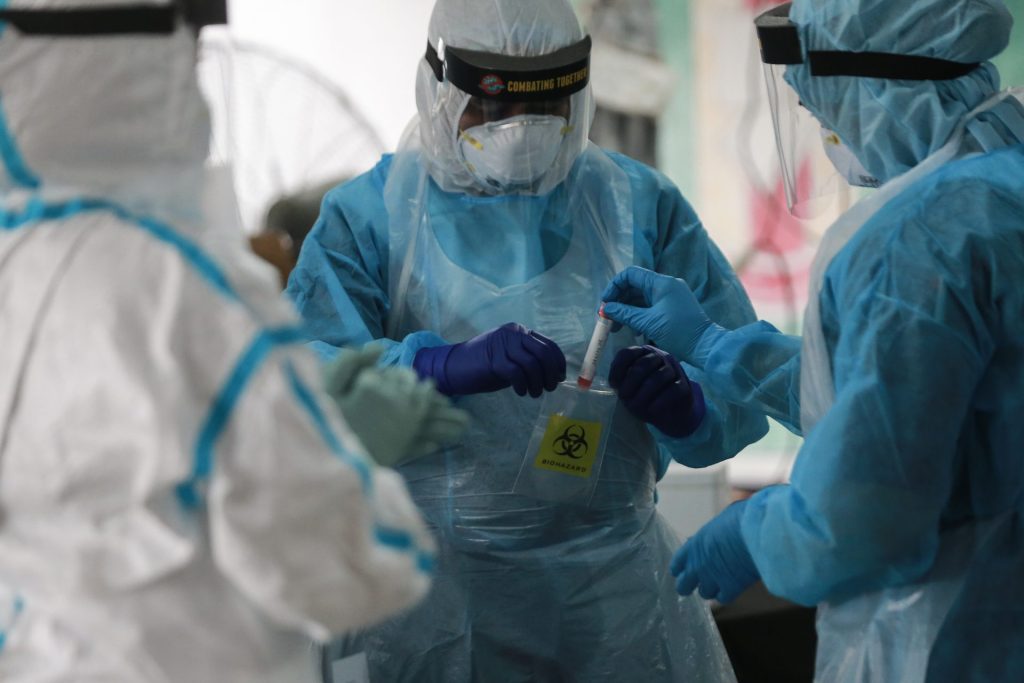
For the Global Partnership Against the Spread of Weapons and Materials of Mass Destruction (GP), outbreaks caused by high consequence pathogens such as Orthoebola viruses must also be understood and managed as biological security and potential bio-proliferation risks. Lessons from previous Ebola disease outbreaks, including in West Africa a decade ago, have shown that effective outbreak response requires not only rapid detection and robust clinical care, but also strong biological security systems that reduce biological risks from high consequence pathogens throughout the response cycle. Safe, secure, and accountable management of patient samples, laboratory facilities including biobanks and processes, Ebola treatment centres, data, waste streams, and transport systems is therefore an essential component of preparedness, response, and long-term resilience.
The Signature Initiative to Mitigate Biological Threats in Africa (SIMBA) provides a framework for integrating biosecurity in public health response to outbreaks of high consequence pathogens. Through its established partnerships, trusted relationships, technical expertise, and sustained capacity-building efforts, SIMBA is well positioned to support the current BVD outbreak response activities, develop local context-centred preparedness capabilities to respond to future outbreaks, while ensuring that biological security considerations are integrated into public health operations from the outset.
In partnership with WHO, Africa CDC, and the International Criminal Police Organization (INTERPOL), as well as other African partners, international organizations and donors, and in line with the Biological and Toxin Weapons Convention (BTWC), SIMBA is willing to support sustainable and nationally owned approaches to managing biological risks and strengthening preparedness for outbreaks of epidemic-prone diseases such as Ebola disease.
The GP recognizes the unpredictable and evolving nature of biological threats and supports efforts to prevent, detect, and mitigate biological risks that could contribute to proliferation, accidental release, loss, theft, or misuse. In response to the current outbreak, and with the objective of strengthening sustainable preparedness and response capacities, we are committed to:
- supporting national and regional initiatives in providing the safe, secure, and accountable management of Bundibugyo virus-related patient samples throughout their full lifecycle, in alignment with national and regional policies;
- supporting the operation, maintenance and security of facilities and equipment, and sustained government stewardship of biological materials and associated infrastructure so that capacities remain functional beyond the current outbreak response;
- strengthening the security of Ebola treatment centers, laboratories and sample transportation through effective cooperation with law enforcement;
- supporting characterization of samples and promoting the use of accurate sample inventories, access-control measures, chain-of-custody procedures, secure cold-chain logistics, and incident-reporting mechanisms, including law enforcement;
- supporting proper waste management, the safe and verified inactivation and/or destruction of residual samples and the consolidation of retained Bundibugyo virus samples and other high consequence biological materials in secure, quality-assured national repositories or biobanks, where appropriate. Long-term storage in decentralized facilities that do not meet agreed biosafety and biosecurity standards should be avoided;
- promoting safe, secure, and responsible scientific use of Bundibugyo virus-related samples, ensuring that research activities are ethically reviewed, nationally owned, scientifically justified, transparent, and accompanied by appropriate access and benefit-sharing and safeguards against misuse, including dual-use risks;
- enhancing frontline and laboratory workforce capacities through deployment, routine simulation exercises, open sharing of training resources and targeted training in biorisk management and best practice with train-the-trainer approaches that ensure preparedness, sustainability and national ownership;
- strengthening national and regional laboratory networks with quality assurance systems for secure sample referral and management, data management, and responsible laboratory information sharing;
- supporting multisectoral coordination among public health, veterinary, security, law enforcement, customs, border management, transport, research, and community actors to ensure that biosecurity measures are practical, trusted, and embedded within outbreak response structures;
- strengthening cross-border cooperation between affected and at-risk countries, including harmonized procedures for sample referral, laboratory confirmation, contact tracing, case notification, safe transport, and management of human remains, in line with the International Health Regulations (2005);
- supporting effective communication strategies to prevent, counter and raise awareness on mis- and disinformation and reduce their impact on biosecurity efforts.
Building on the progress already achieved, SIMBA can play a central role in connecting immediate outbreak response efforts with longer-term investments in biosecurity, biosurveillance, non-proliferation, and enforcement capacities across Africa. Its multisectoral and partnership-based approach enables rapid coordination, promotes interoperability across institutions and borders, and leverages trusted regional relationships and existing training networks to support effective, sustainable, and nationally owned responses to biological incidents.
Continued cooperation through SIMBA can therefore help ensure that the current Bundibugyo virus disease outbreak, and future outbreaks caused by highly dangerous pathogens is addressed not only as a public health emergency, but also as a broader health security challenge requiring coordinated measures to reduce risks, strengthen resilience, raise awareness and prevent future biological threats of all origins.
.
###
About Africa CDC
The Africa Centres for Disease Control and Prevention is the public health agency of the African Union. As an autonomous institution, Africa CDC supports AU Member States to strengthen health systems, improve disease surveillance, and enhance emergency preparedness and response. For more information, visit: http://www.africacdc.org and follow Africa CDC on LinkedIn, X, Facebook, and YouTube.
About Simba
The Signature Initiative to Mitigate Biological Threats in Africa (SIMBA), by the Global Partnership, aims to strengthen health security and non-proliferation across Africa by enhancing capacities to prevent, detect, and respond to biological threats.
Media contact
Africa CDC | Director of Communications and Public Information | kolys@africacdc.org, +251 98 434 6488
SIMBA | SIMBA-office@rki.de