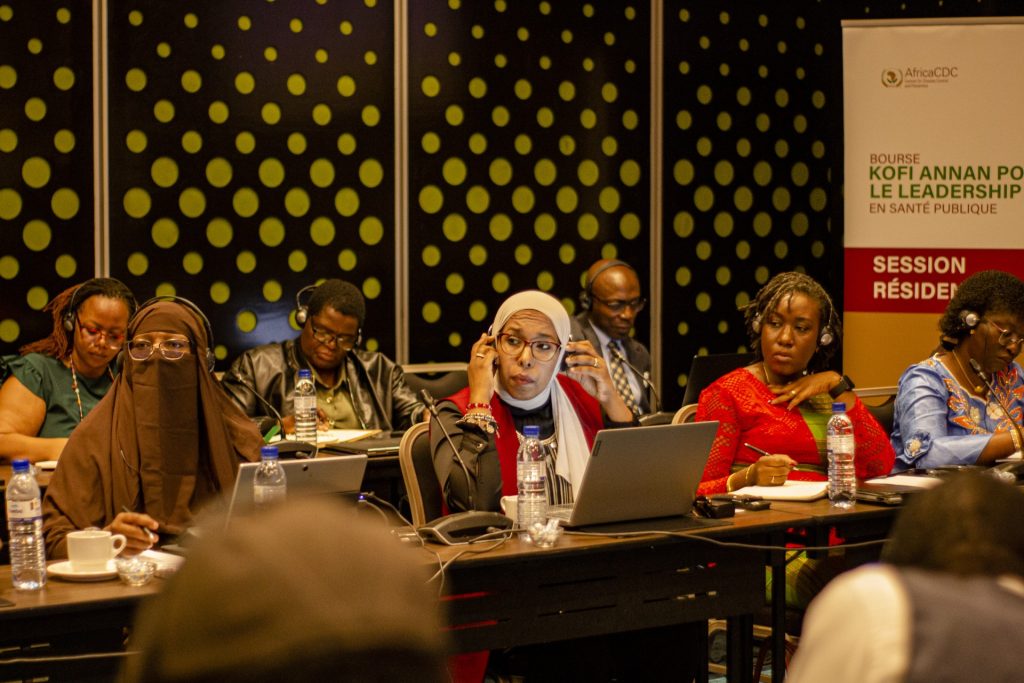
Addis Ababa, Ethiopia, 9 October 2026 – With about 30% of its budget dedicated to training, the Africa Centres for Disease Control and Prevention (Africa CDC) is rolling out a new accreditation framework to improve the quality, credibility and professional recognition of public health training delivered by the organisation and its partners.
Developed with the Association of Schools of Public Health in Africa (ASPHA), a regional network of public health academic institutions spanning 35 African countries, the Continuing Education Unit (CEU) Accreditation Framework introduces common standards for evaluating and accrediting public health training programmes.
For years, Africa CDC and its partners have invested significantly in developing the competencies of Africa’s public health workforce through various training programmes. However, without a standardised, transparent and verifiable quality assurance and accreditation mechanism, such initiatives have not always been formally recognised for continuing professional development within Member States. The new framework aims to address this gap by establishing a credible system for quality assurance and recognition of learning.
The need for such a system is particularly pressing given Africa’s workforce challenges. The continent faces a projected shortage of 5.85 million health workers, while a regional review found that only 39% of countries have continuing professional development frameworks, with just 26% operating such systems. These gaps underscore the importance of ensuring that investments in workforce development translate into recognised qualifications and competencies.
Africa CDC’s training portfolio spans public health leadership, emergency management, field epidemiology, health diplomacy, community health, health systems strengthening and digital health.
“Training is one of our largest investments because Africa’s health security depends on a skilled workforce. But numbers alone are insufficient. We must ensure that training meets recognised standards, builds relevant competencies and delivers measurable results,” said Dr Raji Tajudeen, Deputy Director General at Africa CDC.
The framework introduces a standardised approach to Continuing Professional Development (CPD), covering classroom and online training, fellowships, mentorship, conferences and other learning activities. Through a structured accreditation process, programmes will be assessed against common quality standards to ensure scientific rigour, relevance to workforce needs and measurable learning outcomes, while enabling formal recognition of acquired competencies.
Accreditation will be supported by independent technical review, in collaboration with ASPHA, to promote transparency, credibility and consistency in the recognition of training programmes.
Participants completing accredited learning activities will receive verifiable recognition of their professional development, supported by digital certification and a system for recording learning achievements. Initially covering Africa CDC programmes, the framework is designed for wider adoption across African Union Member States.
“Public health professionals should be able to demonstrate the value of their learning wherever they work. This framework provides a common basis for recognising professional development while respecting national regulatory systems,” said Dr Margaret Kaseje, President of ASPHA.
Africa CDC’s Health Workforce Development Division will coordinate implementation, supported by a joint steering committee and independent reviewers. The initiative will also support continuous improvement of Africa CDC’s training portfolio by strengthening the monitoring of training quality, learning outcomes and the contribution of professional development to workforce competencies.
###
About Africa CDC
The Africa Centres for Disease Control and Prevention (Africa CDC) is the African Union’s autonomous public health agency. Established in 2016 and launched in 2017, it works with Member States to strengthen public health systems and improve disease prevention, preparedness and emergency response. Headquartered in Addis Ababa, it operates through five Regional Coordinating Centres. For more information, visit: http://www.africacdc.org and follow Africa CDC on LinkedIn, X, Facebook, and YouTube.
Media enquiries: Directorate of Communications and Public Information, Africa CDC | Email: communications@africacdc.org