A health worker who supported the Ebola response in Ituri developed symptoms after arrival in France and was diagnosed quickly. Africa CDC calls for continued vigilance, solidarity, and stronger support for frontline teams working to end the outbreak.
ADDIS ABABA, 24 June 2026 – A humanitarian health worker who supported the Ebola response in the Democratic Republic of the Congo (DRC) has been diagnosed with Ebola Virus Disease in France.
The health authorities of France and the DRC have notified Africa CDC of the confirmed case, caused by the Bundibugyo virus. The health worker developed symptoms after arrival in France, sought care promptly, and was diagnosed without delay. The surveillance and reporting systems designed for this type of situation worked.
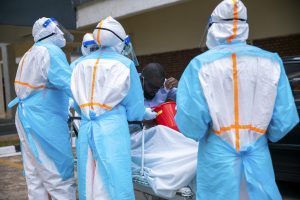
The health worker supported the Ebola response in Ituri Province from 19 May to 19 June. After completing the deployment, he left the DRC in good health and travelled to France. He later developed mild symptoms and sought medical care. Laboratory testing confirmed infection with the Bundibugyo Ebola virus.
The risk of Ebola transmission begins after symptoms appear. The health worker left the DRC symptom-free and met every travel requirement in force at the time. The Government of the DRC has put in place strengthened surveillance, entry and exit screening, and border health measures as part of the Ebola response, including at key points of entry and departure, airports in affected areas, and major transit hubs.
H.E. Dr Jean Kaseya, Director General of Africa CDC, spoke with the Minister of Health of the DRC, the Director of the European Centre for Disease Prevention and Control (ECDC), and the European Commissioner for Preparedness, Crisis Management and Equality, Hadja Lahbib. They reviewed the situation, strengthened coordination, and aligned the public health actions now under way.
“This case illustrates the importance of strong surveillance,” said H.E. Dr Jean Kaseya, Director General of Africa CDC. “The health worker left the Democratic Republic of the Congo without symptoms, and the Government of the DRC has put in place strengthened surveillance, entry and exit screening, and border health measures as part of the Ebola response. Symptoms were identified after arrival in France, and diagnosis was made quickly through alert systems and international coordination.”
“I want to thank this doctor, who served on the frontline in Ituri from 19 May to 19 June, standing with affected communities with courage and dedication. Health workers are carrying the heaviest burden in this outbreak. The right response today is vigilance, solidarity, and stronger support for the teams working to end Ebola at its source. Partners across the world must mobilize and contribute to ending this outbreak.”
Africa CDC commends the speed of detection, diagnosis, and reporting by the French health authorities. The move from first symptoms to laboratory confirmation was made possible by rapid action and information sharing among national, regional, and international partners. Strong surveillance, fast reporting, and effective international cooperation protect communities.
Investigations are under way to establish the most likely period and circumstances of exposure and to support full contact tracing. Authorities in the DRC and France, with Africa CDC, WHO, ECDC, and other partners, are conducting risk assessments and monitoring identified contacts in line with established public health protocols.
The overall risk level of the outbreak remains unchanged. This imported case reinforces the need to maintain sustained vigilance, strengthen surveillance, rigorously apply infection prevention and control measures, and continue supporting the frontline health workers leading the response.
Africa CDC calls on partners and the international community to continue supporting the response and to reject measures unsupported by science, including unnecessary restrictions on travel and trade. Such measures slow the deployment of response teams and the delivery of essential supplies, and weaken the public health response.
Africa CDC reaffirms its full commitment alongside the Governments of the DRC and Uganda to control the outbreak, protect communities, and advance a coordinated continental and global response. Africa CDC will continue to monitor the situation closely and share further updates as verified information becomes available.
About Africa CDC
The Africa Centres for Disease Control and Prevention (Africa CDC) is the continental public health agency of the African Union. Established in 2017 and granted autonomous status by the African Union Assembly in 2022, Africa CDC supports the Union’s 55 Member States in strengthening public health systems and capacities to prevent, detect and respond to disease threats and public health emergencies. Headquartered in Addis Ababa, Ethiopia, the agency operates through five Regional Coordinating Centres and works closely with national public health institutions across the continent.
Contact Media:
Directorate of Communications and Public Information | communications@africacdc.org, kolys@africacdc.org