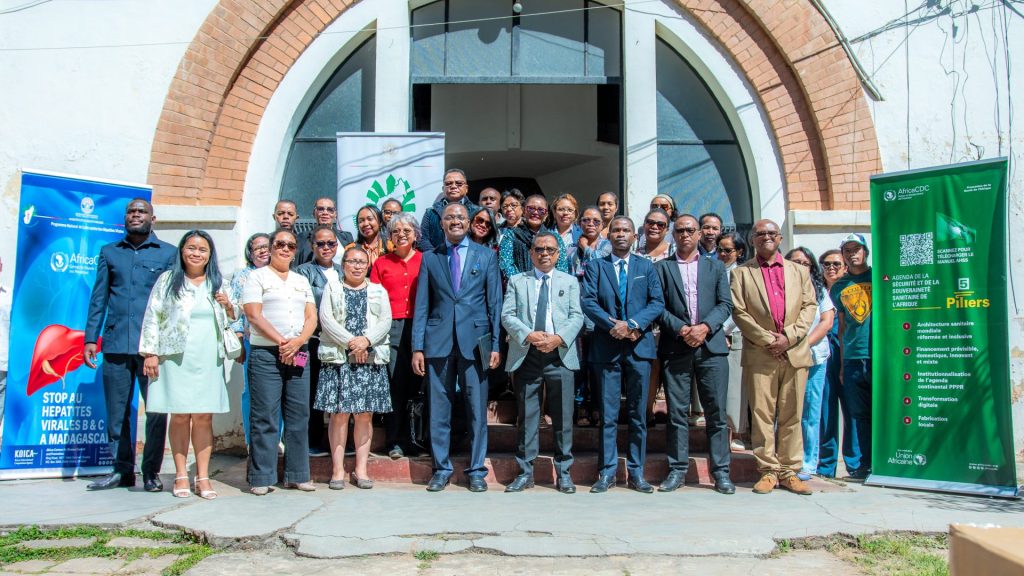
Antananarivo, Madagascar 15 May 2026 — The Government of Madagascar is strengthening its partnership with Africa CDC through the Ministry of Public Health. This effort focuses on taking concrete steps to eliminate viral hepatitis by 2030.
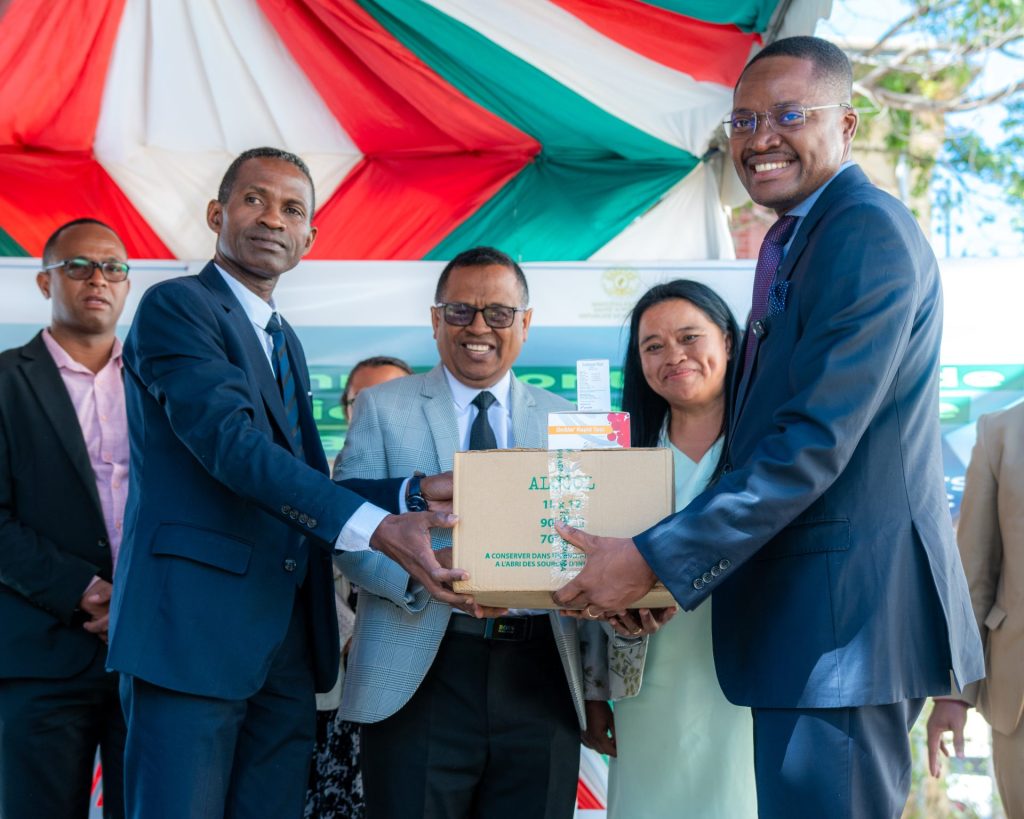
Africa CDC recently handed over a shipment of medicines, screening tests, and essential supplies for viral hepatitis B and C to the Ministry of Public Health. The support strengthens the capacity of sentinel surveillance sites, improve access to early screening and patient care, support laboratory and data system capacities, and accelerate national efforts to control and eliminate viral hepatitis by 2030.
In Madagascar, hepatitis B remains a major public health challenge, with an estimated chronic prevalence of 7%, while vaccination coverage remains below the targets of the continental plan for the triple elimination of HIV, hepatitis, and syphilis.
This initiative is part of a strategic partnership launched in 2021 between the African Union, Africa CDC, and the Korea International Cooperation Agency (KOICA), to strengthen national systems, targeted training, and sentinel surveillance sites for viral hepatitis. It pays attention to pregnant women, who are among the most vulnerable
populations to hepatitis B due to the high risk of mother-to-child transmission. Prioritizing their access to screening will enable early case identification and ensure vaccination of newborns from birth, thereby breaking the cycle of transmission in the long term. This approach is fully aligned with the African Health Security and Sovereignty (AHSS) agenda.
The nationwide initiative is part of the Continental Program for the Prevention and Control of Viral Hepatitis coordinated by Africa CDC, implemented to support African Union member states in achieving the continental and global goals of eliminating viral hepatitis by 2030.
More than 15 African countries have already benefited from strengthened hepatitis surveillance and improved access to treatment thanks to this partnership. This collaboration also includes technical training for health workers and the development of digital reporting systems to enable faster detection and referral of new cases and improved treatment outcomes.
Hon. Minister of Public Health of Madagascar, Dr. Monira Managna, who was represented by Dr. Andrianina Désiré Rakotoarimino, Director General of Preventive Medicine, welcomed a decisive step in the national fight against this disease, in line with the campaign slogan, Break the cycle of hepatitis B transmission and cure hepatitis C. “Viral hepatitis is not just a cold statistic. It is a real threat that too often destroys lives due to a lack of early diagnosis,” she said. She emphasized that “eliminating viral hepatitis by 2030 is a huge challenge, but it is within our reach. Through continental solidarity and the mobilization of everyone, we are turning hope into concrete action.”
Dr Landry Dongmo Tsague, Director of Primary Health Care, noted that viral hepatitis remains “a silent but major threat to public health in Africa,” responsible for severe chronic liver disease, cirrhosis, and cancer. In this context, he emphasized that the response cannot be fragmented, noting that “viral hepatitis cannot be defeated by isolated interventions.”
“The elimination of viral hepatitis by 2030 is an ambitious but achievable goal if we invest in systems, data, and communities,” reaffirming Africa CDC’s commitment alongside Madagascar,” Dr Landry said.
“Providing diagnostics and medicines saves lives and sustainably strengthens health systems,” said Dr Sangwoo TAK, Technical Advisor for Disease Control and Prevention at Africa CDC.
Together, Madagascar and Africa CDC reaffirm their commitment to a future free of viral hepatitis, supported by stronger health systems and more equitable access to essential health commodities through the African Pooled Procurement Mechanism, in line with the 2030 elimination agenda.
###
About Africa CDC
The Africa Centres for Disease Control and Prevention (Africa CDC) is the public health agency of the African Union. As an autonomous institution, Africa CDC supports AU Member States to strengthen health systems, improve disease surveillance, and enhance emergency preparedness and response. For more information, visit: http://www.africacdc.org and follow Africa CDC on LinkedIn, X, Facebook, and YouTube.
Media Contact:
Wilson Johwa, Senior Communications Officer, Directorate of Communication & Public Information | JohwaW@africacdc.org
Ministère de la Santé Publique de Madagascar:
M. Ravoniandro Rina | rravoniandro@gmail.com | +261 34 23 004 77
.