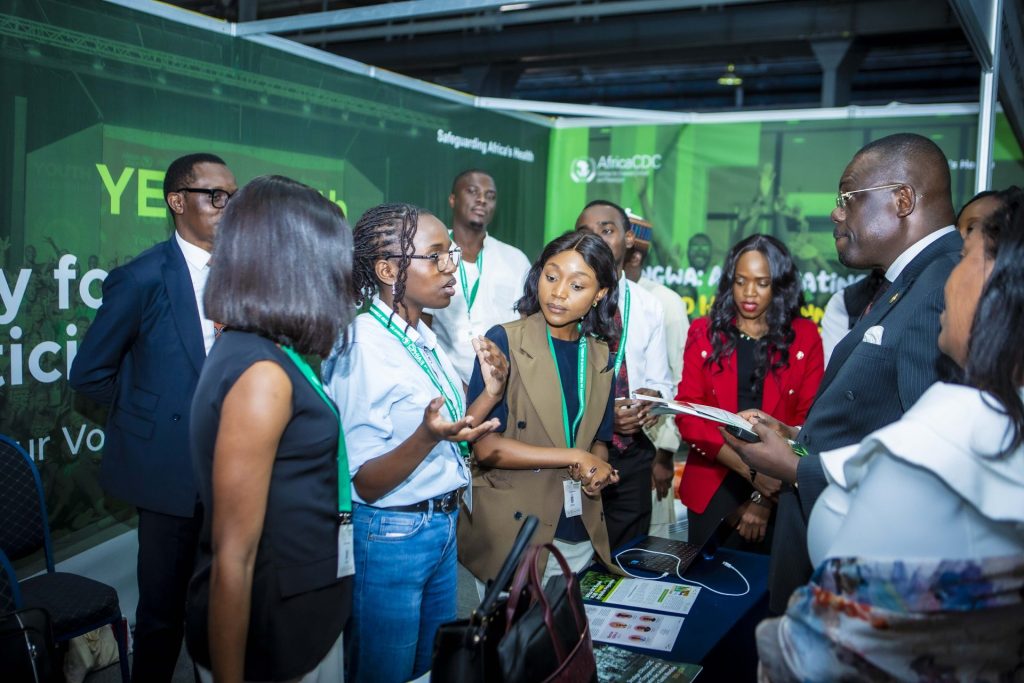
Africa CDC’s Youth Programme is investing in the next generation of public health leaders across the continent. Young professionals are equipped with the experience, mentorship, and professional networks they need to shape the future of the continent’s health. Since its launch, the Programme has hosted 48 interns from 16 African Union Member States placing them at the heart of Africa CDC’s work and giving them a front-row seat to policy, science, and action.
Grace Omoto is one of those young leaders. This is her story
My name is Grace Omoto, a medical student at the University of Nairobi, Kenya. I was drawn to public health through my involvement in various patient-centered initiatives, where I saw how deeply social, economic, and systemic factors influence health outcomes. I became involved in-patient-centered activities because I have grown up in a family of healthcare professionals that have always been passionate about how they can use their skills to help the community outside hospital walls. Over the past two years, this became even clearer through my work with Warrior Glow, now transitioning into Warrior Afya Network, where I have worked with a brilliant team of like-minded individuals to support cancer patients outside the clinical setting. Listening to their stories made me understand that treatment is not just about medication, but also about navigating financial strain, access to care, and emotional support. When I was selected for the Africa CDC Youth Programme’s three-month internship, I arrived in Addis Ababa with curiosity and left with a completely new sense of purpose.
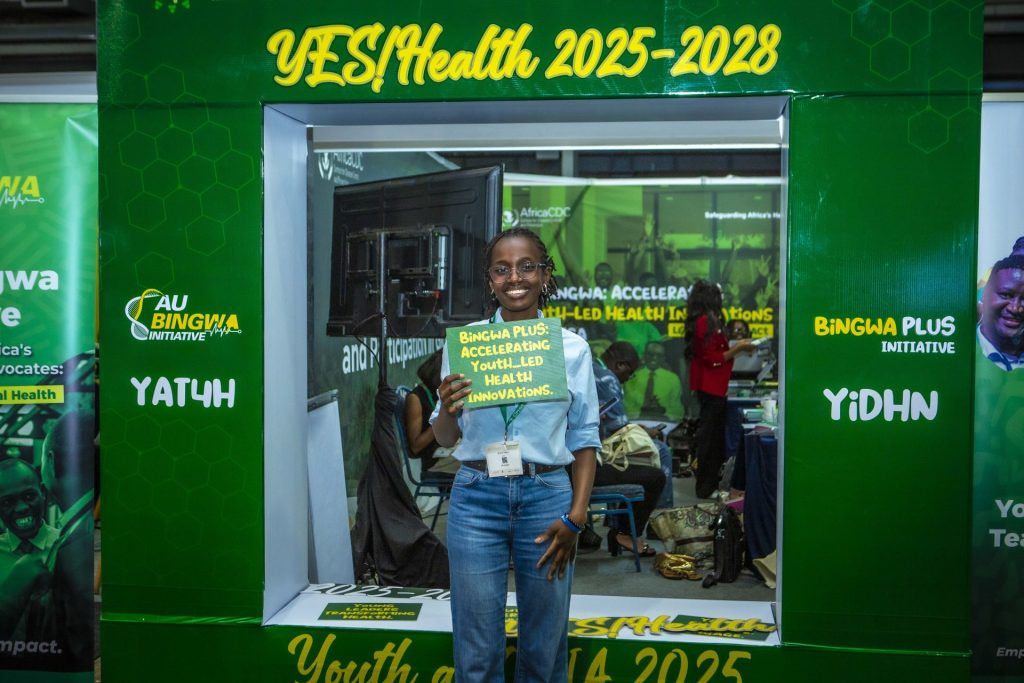
At Africa CDC, I was faced with an inspiring challenge from the start: choosing from a wide range of technical divisions, each tackling something important, from infectious disease surveillance to health systems strengthening. I was spoilt for choice. The Youth Programme helped me navigate these options, guiding me to look beyond my initial ideas and think deeply about what I truly cared about. Choosing the Climate Change and Health team was my decision, but one the Programme empowered me to make.
I had always thought of climate change as an environmental problem. What I discovered was something far more immediate: it is a health crisis, one that affects every person on this continent.
I learned that hotter days push our health systems to the brink. Floods carry diseases like cholera and typhoid into homes where clean water once flowed freely. In dry regions, even basic hygiene like handwashing becomes difficult, leaving communities exposed to outbreaks. Mosquitoes are spreading into new areas, bringing malaria and dengue with them.
The impact on women and girls hit me hardest. When resources run dry, families make desperate choices. Girls are pulled out of school. Young women are pushed into situations that put their health at risk. Pregnant mothers face extreme heat without access to clinics or care. Climate change reaches into every corner of daily life.
There was also an uncomfortable truth I had not expected: the very healthcare systems meant to protect us are also contributing to the problem. This is not a small contradiction; it is a challenge that demands urgent action from within the health sector itself. Africa CDC is already working with countries to build more climate-resilient, lower-carbon health systems.
My time in the programme brought a cascading realisation: climate change is not just an environmental crisis. It is the defining public health challenge of our generation. Every health issue I had ever studied — infectious diseases, maternal health, mental wellbeing — is connected to the stability of our climate. That insight changed how I see my future.
One of the most powerful moments of my internship came in July 2025, when I joined experts from across Africa at the launch of the Africa CDC Continental Climate Change and Health Framework and the African Union One Health Zoonotic Disease Prevention and Control Strategy. Over four days, I sat in rooms where real policy was being shaped, listening, learning, and contributing alongside ministers, scientists, and partners from across the continent.
A conversation with a senior colleague on the first day of the launch, shifted how I saw my role in climate and health. My thoughts about youth engagement had been largely in terms of social media. He challenged me to see it as something far more powerful, reminding me that some of the most meaningful societal changes have been driven by young people who chose to think beyond existing limits. He spoke about courage, responsibility, and the ability of our generation to question systems and reimagine solutions in ways others may not. That perspective stayed with me. I realized that my contribution does not have to be confined to awareness or content creation, but can extend to advocacy, leadership, and shaping real, lasting change in climate and health.
What struck me most was this: high-level frameworks only become transformative when they are paired with action on the ground, and when young people are at the table. None of this journey would have been possible without the Africa CDC Youth Programme. From the moment I arrived in a foreign country, the Programme did not just place me in an internship, it cultivated a community. I was indeed part of a cohort of young interns brought together by a shared commitment to Africa’s health.
One moment that stands out was a conversation with fellow interns during a particularly intense workday. We reflected on how easy it is to feel overwhelmed by the scale of health challenges we were learning about, especially when systems issues kept coming up in every discussion. One of them said something that stayed with me: “Even if we can’t fix everything at once, our responsibility is to keep asking better questions and never lose sight of the people behind the data.” There was something grounding about that moment. It took away the quiet pressure of feeling like we had to have immediate answers and replaced it with a sense of shared purpose. It reminded me that uncertainty is part of learning, and that caring deeply about the work is itself a form of contribution. More than anything, it made the experience feel less isolating and helped me appreciate the value of learning alongside others who were equally trying to make sense of it all.
The Youth Programme actively worked to dismantle barriers and ensure our time in our units was genuinely formative. It opened our eyes to the vast, interconnected world of public health and revealed possibilities we had not dared to imagine. It was through this support that I found my footing, my passion, and my purpose.
Even now that my internship has ended, the Youth Programme continues to provide a platform for connection and growth, transforming what could have been a temporary placement into a lifelong professional commitment.
My two month-long internships at Africa CDC’s Climate Change and Health Programme, working under Dr Yewande Alimi, One Health Unit Lead at Africa CDC and Ms Thato Sengwaketse, Climate Change and Health Technical Advisor at Africa CDC, was more than an internship. It was a chapter that reshaped my ambitions and deepened my commitment to health equity across Africa.
To every young professional reading this: do not wait on the sidelines. The opportunities are being created for us, by organisations like Africa CDC that believe in our generation. Apply for the internships. Join the Youth Programme. Come with your questions, your skills, and your passion. There is space for you at this table.