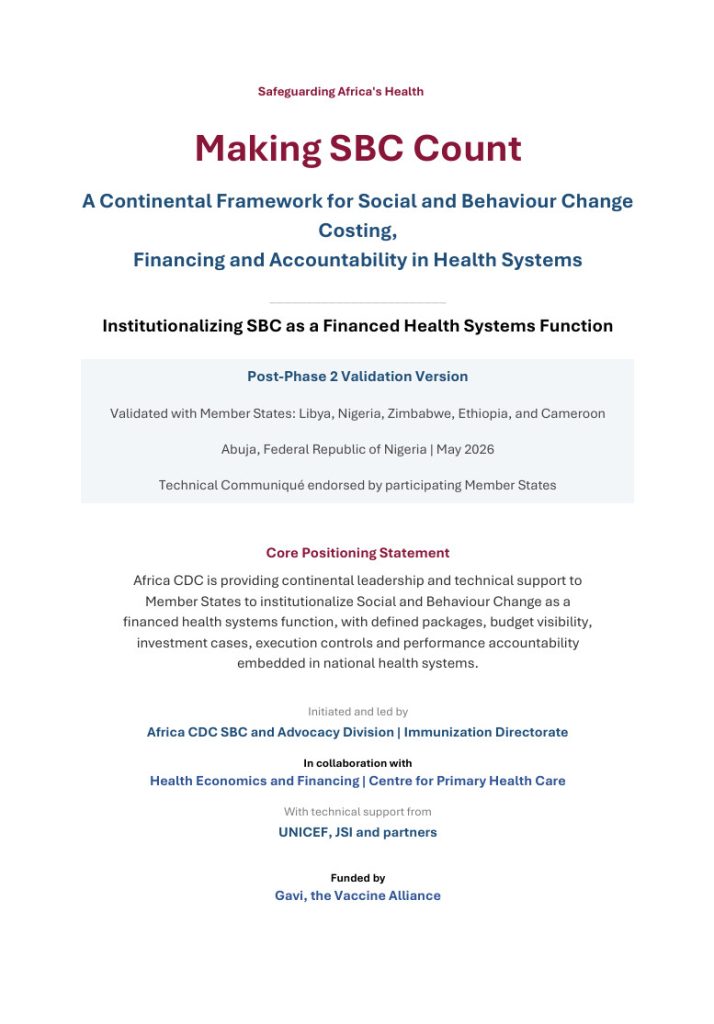
Institutionalizing SBC as a Financed Health Systems Function
Social and Behaviour Change (SBC) determines whether health systems are trusted, services are used, products are accepted, care is sought early, treatments are completed, vaccines are taken up, frontline workers are supported, and communities participate in health decisions. Yet SBC remains chronically under-costed, under-financed and frequently hidden under IEC, health promotion, campaign, or partner-supported budget lines.
This framework shifts SBC from fragmented activity funding to an institutionalized financing model. It defines SBC as a core health systems function that should be planned, costed, budgeted, coded or shadow-coded, financed, executed, tracked, and reviewed within national health financing and accountability systems.
The framework is rooted in continental application. Phase 1 in Malawi generated the initial package, taxonomy, costing tool and institutionalization scorecard with four Member States: Burundi, The Gambia, Malawi, and Uganda. Phase 2 in Abuja expanded the practical application and validation process to five additional Member States: Libya, Nigeria, Zimbabwe, Ethiopia, and Cameroon. Through practical costing labs, peer review, scorecard discussions, budget coding analysis and country reflection, the framework was refined and validated as a continental footprint for SBC costing and financing.
The framework now provides a practical pathway for countries to diagnose institutional readiness, identify costable priorities, map current expenditure, build investment cases, pursue budget visibility and coding pathways, align partners, and track money to results through quarterly reviews.