Executive Summary
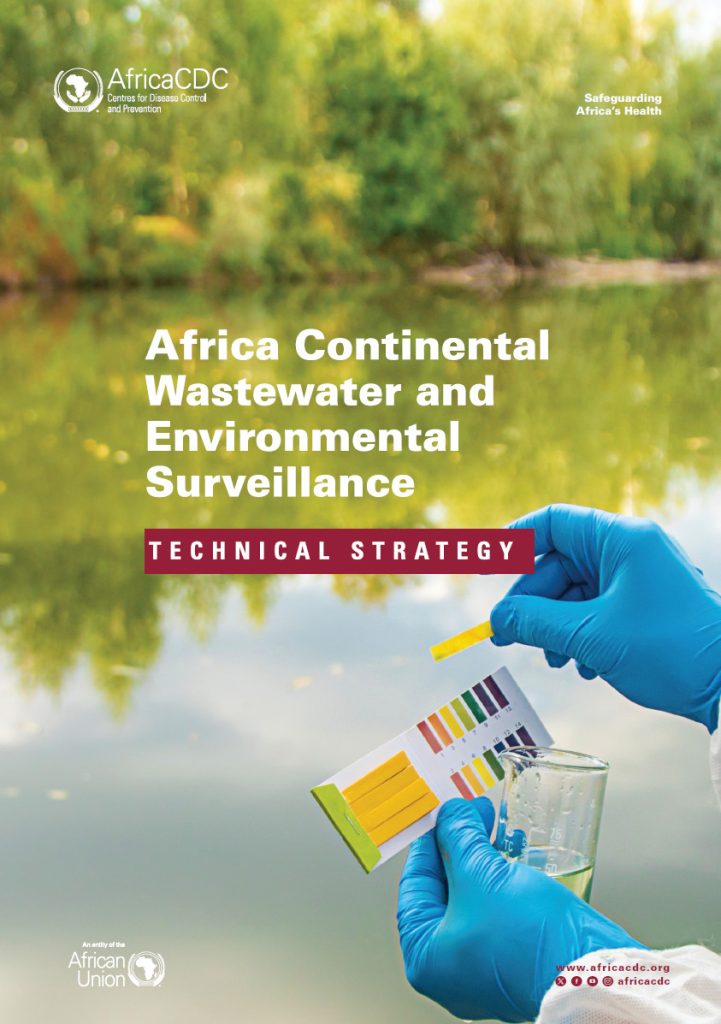
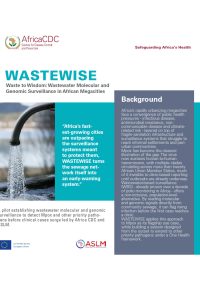
Wastewater and Environmental Surveillance (WES) is emerging as a transformative frontier in public health intelligence, providing a non-invasive, cost-effective, and scalable approach to detect population-level health and environmental risks. First used for poliovirus monitoring and later expanded during the COVID-19 pandemic, WES demonstrated its value as an early warning tool capable of identifying pathogens and antimicrobial resistance (AMR) trends before widespread clinical detection. As Africa continues to face recurrent outbreaks, rising AMR, rapid urbanization, and environmental pressures, WES presents a strategic opportunity to strengthen health security, protect ecosystems, and advance sustainable development.
Africa’s unique epidemiological, social, and infrastructural context presents both challenges and opportunities for WES. While sewer coverage remains limited in many settings, the continent has a strong foundation in polio environmental surveillance, growing genomic sequencing capacity, and an expanding network of public health laboratories. Pilots implemented for SARS-CoV-2 and Mpox across several countries have demonstrated technical feasibility and the added value of WES in informing public health action. However, fragmentation of protocols, limited technical capacity, weak data integration mechanisms, and insufficient sustainable financing continue to constrain scale-up.
Recognizing its potential, the Africa Centres for Disease Control and Prevention (Africa CDC), under the mandate of the African Union (AU), is leading the development of a coordinated continental WES strategy for the period 2026–2031. The strategy aims to guide the institutionalization of WES across AU Member States as a complementary and strengthening component of national and regional surveillance systems. It aligns with the African Health Security Agenda, the One Health framework, SDG commitments, the WHO Wastewater Surveillance Standards (WHO, 2023), and ongoing global discussions on pandemic prevention and preparedness. This strategy document is a continental strategic framework, providing overarching direction (“what” and “why”), while allowing Member States to adapt operationalization (“how”) based on national contexts, surveillance objectives, and available resources.
This strategy seeks to achieve six core objectives:
The strategy is structured around seven strategic pillars that reflect the continent’s priorities and values:
By advancing WES as a core component of national and continental surveillance ecosystems, Africa will strengthen its preparedness for emerging threats, enhance environmental health monitoring, support climate resilience, and contribute to global health security. This strategy represents a commitment to innovation, solidarity, and self-determination, positioning Africa as a global leader in integrated surveillance science.