The Africa Pathogen Genomics Initiative (Africa PGI), another Africa CDC flagship programme, is strengthening the continent’s capacity to detect, monitor and respond to infectious disease threats through genomic surveillance and improved laboratory diagnostics.
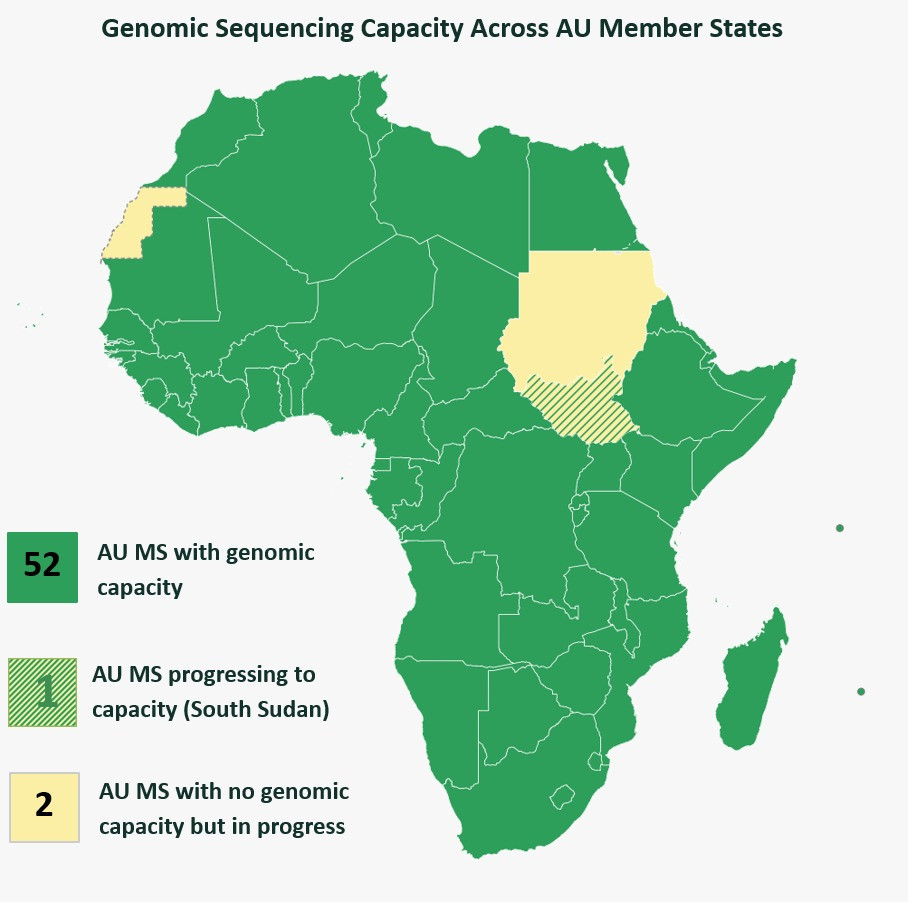
Launched in October 2020, the initiative has expanded genomic sequencing capacity from just seven African Union Member States in 2019 to 52 of 55 Member States today.
Genomics enables scientists to identify disease-causing pathogens, understand how they spread and track changes that could affect public health. Through Africa PGI, more than 80 sequencing machines and 110 supporting platforms have been deployed, while over 2,500 professionals have received specialised training across 54 countries.
Genomics in Action: Ebola Response in the DRC
The 2026 Bundibugyo Ebola outbreak in the Democratic Republic of Congo (DRC) demonstrated the importance of genomic surveillance and accessible diagnostic services.
Genomic analysis helped establish the outbreak’s origin and identify transmission across the DRC–Uganda border, informing surveillance and response measures.
Meanwhile, introducing testing facilities closer to affected communities reduced the time needed to confirm infections from several days to about one hour, enabling faster treatment, isolation and contact tracing.
Expanding Disease Surveillance
Africa PGI has expanded beyond COVID-19 to address other public health threats, including mpox, cholera, malaria and antimicrobial resistance.
The initiative has supported the sequencing of more than 3,500 mpox genomes across 23 Member States, over 3,000 cholera isolates and the analysis of more than 20,000 malaria samples across 14 countries.
Through its WASTEWISE programme, Africa PGI is also strengthening wastewater surveillance in Addis Ababa, Kinshasa and Nairobi, covering more than 40 million people and providing additional information on disease threats circulating in communities.
Now in its second phase, Africa PGI 2.0 focuses on strengthening national laboratory systems, developing specialised expertise, expanding access to diagnostics and improving the sharing and use of genomic data.
The initiative is strengthening Africa’s ability to generate and use its own scientific evidence to detect emerging health threats and respond more effectively to disease outbreaks.