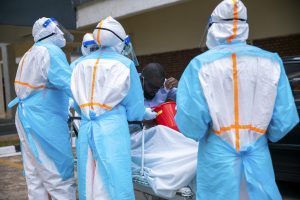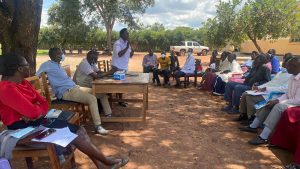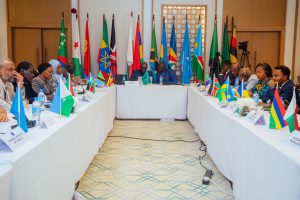

Addis Ababa, 14 August 2026 – Africa CDC welcomes the recommendations of the Emergency Consultative Group (ECG), which will guide the organisation in providing the best possible scientific advice to the Democratic Republic of the Congo and other African countries as they respond to the Ebola Bundibugyo outbreak.
We extend our profound appreciation to the members of the ECG, our distinguished African scientists, many of whom serve in leading African and global scientific and advisory bodies for making their expertise, independence and experience available to our continent.
We particularly recognise Prof. Salim Abdool Karim, Chair of the ECG, as well as Prof. Helen Rees, Dr David Parirenyatwa, Prof. Lucille Blumberg, Prof. Jean-Jacques Muyembe, Prof. Francine Ntoumi, Prof. Rose Leke Fonbang, Prof. Jean Nachega, Dr Amadou Sall, Prof. Oyewale Tomori, Prof. Samba Sow, Prof. Dimie Ogoina, Prof. Abderahmane Maroufi, Prof. Maha El Rabbat, Prof. Samia Menif Marrakchi, Prof. Fawzi Derrar, Dr Sultani Matendechero, Prof. Nelson Sewankambo, Prof. Claude Mambo Muvunyi, and Prof. Agnes Binagwaho.
The establishment of the ECG reflects the Africa CDC principle that African public health decisions must be informed by the best available science, grounded in African realities and led by trusted African expertise, while drawing on the strongest scientific evidence from across the world.
At this critical moment in the Ebola Bundibugyo outbreak, science must remain our compass. The recommendations of the ECG will therefore help Africa CDC strengthen its advice to the Government of the DRC and other Member States.
We are proud that Africa has the scientific leadership, knowledge and experience required to confront its most complex public health emergencies. Our continent is not short of expertise. African scientists have led some of the world’s most important advances in understanding, detecting and responding to infectious diseases, including Ebola.”
Summary of the Africa CDC ECG meeting
- Following a detailed presentation on the epidemiology of the current Ebola epidemic, the ECG noted that the latest available data included 4,449 confirmed cases and 2,061 confirmed deaths, with a case fatality rate of 46.3% in the DRC. It was further noted that there are approximately 100 new cases each day and that the R(t) has consistently been above 1. As the epidemic is still growing rapidly, and faster than previous Ebola epidemics, the Public Health Emergency of Continental Security (PHECS) declaration remains fully justified. The ECG therefore recommends continuing the PHECS, given the concerning Ebola epidemiological picture at present.
- The ECG noted significant improvements in the quality of data and the level of epidemiological detail provided regarding hotspots, age groups and clinical presentations. These substantially enhance our understanding of the epidemic and provide much better evidence to guide the Ebola response. The ECG commended Africa CDC on the quality and detail of its presentation.
- Progress in the Ebola response in Uganda and the DRC was duly noted. Recognising the difficult conditions under which the response is being mounted in the DRC, the ECG was pleased to note the increases in bed availability, laboratory testing and response measures. The Ebola response organisations and teams on the ground are commended for these accomplishments. The epidemiological evidence pointed to three issues that need to be addressed:
a. It is concerning that 63% of Ebola deaths in the last two weeks occurred in the community, and that only about a third of Ebola deaths took place in Ebola Treatment Centres. This has substantial repercussions for case detection, the number of exposed contacts, risks to home caregivers, and the accuracy of reporting of community deaths.
b. Each case of Ebola not diagnosed, or not diagnosed in a timely manner, is a lost opportunity for epidemic control, as it means that spread to others cannot be interrupted and contacts cannot be traced. It was noted that contact tracing for detected cases in the DRC is sub-optimal. When cases are not detected and their contacts not traced, this makes it even more difficult to stop ongoing community transmission. As case detection is key to the Ebola response, this is an area that needs additional resources and effort.
c. It was pleasing to note that the number of laboratories testing for Ebola in the DRC has increased from the original two to a current total of 19, with two additional mobile laboratories, providing a combined capacity of over 3,000 samples per day.
- An excellent summary prepared by Africa CDC of the available evidence on the effectiveness of the Ervebo vaccine against the Bundibugyo Ebolavirus was presented at the ECG meeting. The available evidence confirmed that there is no reliable evidence of its clinical efficacy, that immunological data are difficult to interpret in the absence of a validated correlate of protection, and that the available animal data on efficacy are limited by the very small number of animals used in the studies. The ECG noted that new evidence on binding antibodies and clinical case series is cautiously promising. It was noted that there remains a reasonable chance the vaccine is not effective against Bundibugyo virus, and that more evidence is needed on the efficacy of Ervebo in preventing it. The ECG is strongly supportive of prioritising use of the Ervebo vaccine for two purposes at this time:
a. Implementation of the Ervebo vaccine under a clinical trial protocol for ring vaccination of contacts, drawing on the approach used in the Ebola Ça Suffit! trial, in which large numbers of contacts are vaccinated ,one group immediately, and the other 2–3 weeks later. This would enable large numbers of contacts to receive the vaccine, while providing critical evidence on its clinical efficacy in preventing Ebola infection.
b. Compassionate provision of the Ervebo vaccine under a clinical study protocol to frontline workers, with documentation of any incident cases of Ebola and the clinical course and outcomes of the disease in vaccinated staff. This will make the vaccine available to a large number of frontline workers at high risk, in order to generate scientific evidence on its impact on the clinical course of the disease, and specifically on whether it reduces the risk of death in those infected with Bundibugyo virus post-vaccination. Compassionate implementation to all frontline workers at risk, without a control group, is justified, as the control case fatality rate can be derived from an age- and gender-matched sample from the overall epidemic.
The ECG noted that new evidence on the effects of Ervebo on Bundibugyo Ebolavirus is accumulating rapidly. Evidence emerging from the two priority vaccine protocol implementation strategies listed above should guide and, where necessary, modify the use of the vaccine in the Ebola response.
###
About Africa CDC
The Africa Centres for Disease Control and Prevention is the public health agency of the African Union. As an autonomous institution, Africa CDC supports AU Member States in strengthening health systems, improving disease surveillance, and enhancing emergency preparedness and response. For more information, visit: http://www.africacdc.org and follow Africa CDC on LinkedIn, X, Facebook, and YouTube.
Media Contact
Directorate of Communications and Public Information, Africa CDC | Email: communications@africacdc.org