
ADDIS ABABA, ETHIOPIA — The Africa Centres for Disease Control and Prevention (Africa CDC) thanks H.E. President Félix-Antoine Tshisekedi Tshilombo for his leadership and clear guidance to advance a comprehensive package of bold, innovative measures to control the Bundibugyo virus disease outbreak. Africa CDC also thanks H.E. Dr Samuel Roger Kamba, Minister of Public Health, Hygiene and Social Welfare, for his strong support in translating that direction into action.
This national ownership provides the authority, speed and accountability required to deliver an emergency response at scale.
“Faced with this unprecedented emergency, my government has decided to act with urgency and at scale. We will move forward with large-scale vaccination and a village-centered response to identify every suspected case and death, and ensure that protection, care and reliable information reach every community. Our objective is clear: save lives, restore trust and stop this outbreak.”
— H.E. Félix-Antoine Tshisekedi Tshilombo, President of the Democratic Republic of the Congo, 5 August 2026
This action cannot wait because:
- Scale and speed. According to DRC Government data reported on 7 August, 4,120 confirmed cases and 1,887 deaths were recorded within 12 weeks of the outbreak declaration. At a comparable point after declaration, this represents approximately nine times as many confirmed cases and six times as many deaths as the 2014–2016 West Africa epidemic.
- Geographic spread. DRC Government data show that the outbreak expanded from 11 health zones in one province (Ituri) on 15 May 2026 to 53 health zones across five provinces (Ituri, North Kivu, South Kivu, Haut-Uele and Tshopo) by 7 August 2026.
- Transmission is outpacing conventional operations. Africa CDC reports that only about 10% of expected contacts have been listed and that approximately 70% of those listed are being followed, below the 95% operational target. Recent reports indicate that roughly four in five new infections are occurring outside known transmission chains and that more than 60% of deaths are occurring in communities. These patterns suggest that undetected transmission may have been occurring few months before its detection.
- Erosion of community trust. Dialogue with community leaders and representatives shows that many communities feel disrespected and insufficiently involved in the outbreak response. The disruption and cost of essential health services, compounded by humanitarian needs and barriers to accessing care, are further undermining confidence in the response.
From presidential direction to operational delivery. At the meeting on 5 August 2026, the Government of the DRC, under the leadership of President Tshisekedi, took courageous political decisions to control the outbreak. These are summarized in the concept “One Response, six mutually reinforcing interventions”:
1. A village-centered response led by trusted community health workers (CHWs) and Digitally Transformed. Each affected village will select trusted CHWs to serve as its direct interlocutors with the response. They will be trained, equipped, supervised and paid to identify alerts, support contact follow-up, promote early referral, explain vaccination, support safe and dignified burials, and communicate community concerns. This village-by-village reset will reveal the outbreak’s true magnitude, recover missed transmission chains and produce a complete, verified contact list for immediate daily follow-up.Each CHW will be equipped and connected through available mobile or satellite links, to report alerts, contacts, referrals, vaccinations and commodity gaps in real time.
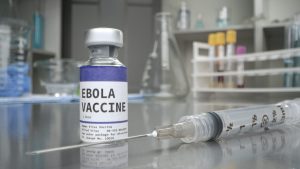
2. Protocol-governed expanded use of licensed Ervebo vaccine. Launch vaccination with Ervebo vaccine in priority areas as soon as national authorizations and ICG allocation are secured. Begin with rings, frontline workers and people in the highest-transmission hotspots, then expand geographically under the master protocol as safety, data quality, operational readiness and real-time effectiveness signals permit. Vaccination is an opportunity to strengthen, using village CHWs, case finding, contact management, infection prevention and control, safe and dignified burials, and clinical care.
3. Free access to essential health services and a reliably paid workforce. Temporarily remove user fees and protect access to essential primary care in Ebola-affected areas by (1) ensuring predictable payment for health workers in public and private facilities to stop strikes, backed by transparent payroll controls, (2) maintaining uninterrupted supplies of personal protective equipment, diagnostics, medicines, water and sanitation materials, and other essential commodities, and (3) ensuring functional services of health centers to encourage earlier care-seeking, reduce hidden transmission and protect continuity of routine care.
4. Providing Treatment and post-exposure prophylaxis under approved protocols. Rapidly expand access to optimized supportive care and remdesivir for eligible patients with laboratory-confirmed BVD infection per a national guidance on compassionate use. High-risk contacts should receive, as per the approved protocol access to Obeldesivir post-exposure prophylaxis. We are exploring the possibility to learn from the Ugandan lesson where Remdesivir was used for both patients and contacts.
5. Management of humanitarian issues, including the safe reopening of schools. Integrate humanitarian assistance into the outbreak response, including food, water, protection, psychosocial support, essential services and, where possible, the voluntary and safe return of internally displaced people living in camps. Schools should reopen in September following local risk assessments, with handwashing facilities, trained teachers, rapid reporting of suspected cases and clear referral procedures. CHWs should connect schools, families and response teams to protect children, prevent stigma and maintain education safely.
6. Strong coordination and end-to-end financial accountability. President Tshisekedi called for stronger coordination, greater financial transparency, and more effective use of available resources to accelerate control of the outbreak. Each partner must disclose amount received and allocation made. At the DRC Government’s request, Africa CDC is working with WHO to establish a unified financial tracking to ensure that resources are aligned with national priorities and reach frontline operations rapidly. Solidarity of African member states and partners has been unprecedented, with more than US$450 million already mobilized for the Ebola response (in addition to funds for the humanitarian response). Also, we acknowledge the US$242 million in new funding announced by the United States Government on 5 August and we call on all partners to remain engaged and provide additional support to fill the financial gap towards stopping this outbreak.
These six interventions are designed to function as one operating model. Vaccination creates a new point of engagement; village-selected CHWs convert that engagement into faster alerts, stronger contact follow-up and greater trust; free, supplied services make early referral credible; treatment and post-exposure prophylaxis provide eligible patients and contacts a pathway to protocol-based care; humanitarian support protects daily life and safe schooling; and end-to-end financial tracking ensures that resources reach frontline operations.
““Ebola is ultimately stopped in communities. Putting communities at the centre means listening to them, and respecting their knowledge. When communities lead and institutions support them with science, solidarity and accountability, we can break transmission, save lives and end this outbreak.”— Dr Tedros Adhanom Ghebreyesus, Director-General, World Health Organization, 5 August 2026
Regarding vaccination with the Ervebo vaccine
In the current emergency context of a rapidly escalating Bundibugyo virus disease outbreak in the DRC, the strategic use of the existing Ervebo vaccine because of its potential cross-protection is the only vaccination strategy currently available that must be deployed rapidly and at larger scale to reduce severe disease and deaths, under protocol-governed, ethically approved and with appropriate active safety and effectiveness monitoring.
This recommendation is driven by the urgency of the outbreak, the growing—though not yet conclusive—body of evidence for cross-protection, and Ervebo’s established safety profile and availability.
“Waiting for perfect evidence while people die is not acceptable. Acting as if plausibility were proof is equally unacceptable. Africa CDC rejects a false choice between protecting people and generating evidence. Our position is to move now under a transparent, ethical and scientifically rigorous protocol, implementing the decision of President Tshisekedi and the DRC Government while protecting people and answering the effectiveness question decisively.”
— H.E. Dr Jean Kaseya, Director General, Africa CDC, 5 August 2026
The table below summarizes the current body of evidence on the potential cross-protective effects of the licensed Ervebo (rVSV-ZEBOV) vaccine against Bundibugyo ebolavirus. It highlights what each study demonstrates, the key limitations of the available evidence, and the implications for decision-making.
Collectively, published articles in peer-reviewed journals and preprints provide biologically plausible and increasingly consistent evidence that Ervebo may confer partial heterologous protection against Bundibugyo ebolavirus, particularly against severe disease and death. There is a continued need for randomized clinical trials to generate robust evidence and determine the level of clinical effectiveness against Bundibugyo virus. Deployment decisions therefore require balancing the accumulating evidence, the severity of the outbreak, the vaccine’s established safety profile, and the absence of alternative licensed vaccines.
| Evidence | What the evidence shows | What remains unknown | Additional detail (2026) |
| Non-human primate challenge Falzarano et al. (2011); Mire et al. (2013) | Authentic-virus studies found 3/4 survival in NHP after rVSV-ZEBOV vaccination versus 1/4 in mock controls, and 3/3 survival after a sequential SUDV-prime/EBOV-boost regimen. | Groups were very small; the challenge was not uniformly lethal; and the fully protective regimen was not Ervebo alone. | Together, the studies provide direct preclinical proof of concept that EBOV-GP–based vaccination can confer heterologous protection, while showing that protection may depend on the regimen. |
| Human binding antibodies PREVAC / Lhomme et al. (2026) | Among 179 samples, licensed Ebola vaccine regimens induced detectable BDBV-binding antibodies. In Ervebo recipients at day 28, median BDBV binding was 282 MFI versus 1,788 MFI against homologous EBOV—about 6.3-fold lower. | Binding antibodies are not a validated correlate of BDBV protection; the study did not measure neutralisation or clinical effectiveness. | Cross-reactivity was observed across vaccine platforms, ages and time points, providing reproducible human immunogenicity evidence but no direct estimate of protection. |
| Pseudovirus neutralisation Hoffmann et al. (2026) | Most sera from Ervebo recipients neutralised pseudoviruses carrying glycoprotein from the current BDBV strain, although less efficiently than pseudoviruses carrying EBOV glycoprotein. | Pseudovirus assays do not reproduce authentic-virus infection and cannot establish protection against disease, severe illness or death. | These results provide functional evidence extending beyond mere antibody binding and demonstrate activity against the glycoprotein of the virus responsible for the outbreak, while remaining a laboratory surrogate marker. |
| Ferret immunogenicity Wight et al. (2026) | Ervebo-platform vaccination produced BDBV-reactive IgG. The geometric mean endpoint titre was 16,582 against BDBV glycoprotein versus 56,554 against EBOV glycoprotein—approximately 3.4-fold lower. | The animals were not challenged with BDBV; the study measured binding, not neutralisation or protection. | The study demonstrates consistent cross-reactive antibodies after rVSV-EBOV vaccination. It does not support a claim of 100% protection. |
| DRC longitudinal cohort Halbrook et al. (2026 preprint) | Among 1,081 people previously vaccinated in Beni and Mbandaka, approximately half of participants in Beni showed BDBV-glycoprotein seroreactivity after vaccination. | The association was not consistent in Mbandaka. The analysis used a binding endpoint and was observational. | The contrasting site patterns suggest that cross-reactive responses may vary by population, baseline immunity, prior exposure or assay context. |
| Outbreak observations DRC surveillance and Mongbwalu cluster (2026) | Nine confirmed cases with a recorded history of Ervebo vaccination reportedly survived, and none of 242 deaths with vaccination status available was recorded as vaccinated. In one probable health-worker cluster, 3/3 vaccinated workers survived while 5/5 unvaccinated workers died. | Vaccination histories and denominators were incomplete; the cluster was not laboratory confirmed; and survivor, ascertainment and confounding biases are substantial. | These observations are hypothesis-generating and may signal protection against severe outcomes, but they cannot establish vaccine effectiveness. |
| Hospital staff cohort LaRochelle et al. (2026) | At a Bunia hospital, 37 staff were admitted with infectious symptoms; 11 tested positive for BDBV. Three of the 11 confirmed cases had been vaccinated. Two confirmed cases died: one was unvaccinated and one had unknown status. | The cohort was small; testing and vaccination documentation were incomplete; and exposure, care and selection differences prevent an effectiveness estimate. | The findings are compatible with, but do not prove, partial cross-protection and reinforce the need for prospective safety and effectiveness monitoring during deployment. |
What the totality of evidence justifies. The evidence supports the immediate launch of a large-scale, protocol-governed expanded use of Ervebo vaccine, beginning with eligible contacts and contacts of contacts; health-care workers; laboratory, ambulance and treatment-centre staff; safe and dignified burial teams; CHWs; religious leaders; village heads; other responders; and people in high-transmission hotspots with repeated occupational exposure such as motorcycle taxi drivers. Inclusion must follow the approved protocol and product-specific safety requirements, with rapid expansion as safety, operational readiness, outbreak dynamics and real-time effectiveness data permit. Every dose should contribute to monitoring laboratory-confirmed disease, severe illness and death. Vaccination must reinforce—not replace—active case finding, rapid diagnostics, isolation and supportive care, infection prevention and control, safe and dignified burials, contact management and trusted community engagement.
Strong partnership under Government leadership is now essential to rapidly initiate these new interventions in the priority hotspots. Implementation of the protocol-governed expanded use of Ervebo will require timely release of the requested vaccines through the International Coordinating Group (ICG), Gavi support for operational costs, and careful village-based decentralized microplanning to ensure safe, targeted and effective rollout. Africa CDC, WHO, UNICEF, MSF and other partners should continue working closely with the Government to accelerate these steps and support implementation.
Operational readiness – leveraging the licensed Ervebo platform and global stockpile. Ervebo is a WHO-prequalified single-dose vaccine for disease caused by Zaire ebolavirus and has an extensive safety and deployment record. Established delivery and pharmacovigilance systems make rapid mobilization feasible.
Strong partnership in action is now needed. Africa CDC supports the DRC Government’s decision to submit its formal request to the ICG on Wednesday, 12 August 2026, following the required national ethics and regulatory approvals. Africa CDC calls on the ICG to review the complete dossier urgently and authorize the full quantity requested by the DRC, consistent with the approved vaccination strategy, operational readiness and safeguards for the global stockpile. Africa CDC urges an expedited decision so that UNICEF can arrange delivery immediately after approval.
Africa CDC applauds Gavi’s commitment to support the operational costs once the DRC submits its costed request. Gavi has also announced up to US$40 million to accelerate access to vaccines and a further US$10 million for outbreak response and continuity of routine immunization. The final costed package should finance cold-chain operations, transport, vaccination teams, CHWs, safety monitoring, data systems, communications, supervision and independent financial accountability, linked to approved national and decentralised microplans.
Microplanning is already under way. Africa CDC, WHO and UNICEF experts are working side by side with the DRC Expanded Programme on Immunization (EPI/PEV), the Institut National de Santé Publique (INSP), the Institut National de Recherche Biomédicale (INRB), and national and field incident-management teams to complete national and decentralized microplans. These plans define priority provinces, health zones and villages; target populations and dose allocations; vaccination and supervisory teams; cold-chain routes; informed participation; adverse-event surveillance; infection prevention and control; data capture; security; waste management; community engagement; and daily accountability for doses and results.
During the expanded use of the Ervebo vaccines, Africa CDC and its partners will ensure that:
- Usable evidence is generated. Record medical history, vaccination, exposure , clinical condition, prior Ebola vaccination, pregnancy status where relevant, and serious adverse events in a secure, interoperable platform. Link epidemiological data with genomic surveillance while protecting confidentiality.
- Active safety surveillance and informed participation are guaranteed. Deploy pharmacovigilance teams at every site; ensure rapid clinical assessment of adverse events; use informed-participation processes appropriate to the approved expanded use protocol; and establish community advisory mechanisms before vaccination begins.
- Results are reported transparently and operations adapt to emerging evidence. Use independent data and safety oversight, pre-specified analyses and clear decision rules. Publish the protocol, analysis plan and results rapidly. If benefit is demonstrated, expand access equitably; if futility or harm is established, pause, stop or modify the strategy.
“Africa’s health security and sovereignty are indivisible. We must act early, act together and act on the basis of science. Africa is proud of the bold leadership of Africa CDC in safeguarding the health of people across the continent and around the world.”
— H.E. Mahmoud Ali Youssouf, Chairperson of the African Union Commission, Presidential High-Level Meeting, Burundi, 16 June 2026
.
###
About Africa CDC
The Africa Centres for Disease Control and Prevention is the public health agency of the African Union. As an autonomous institution, Africa CDC supports AU Member States in strengthening health systems, improving disease surveillance, and enhancing emergency preparedness and response. For more information, visit: http://www.africacdc.org and follow Africa CDC on LinkedIn, X, Facebook, and YouTube.
Media enquiries
Directorate of Communications and Public Information, Africa CDC | Email: communications@africacdc.org