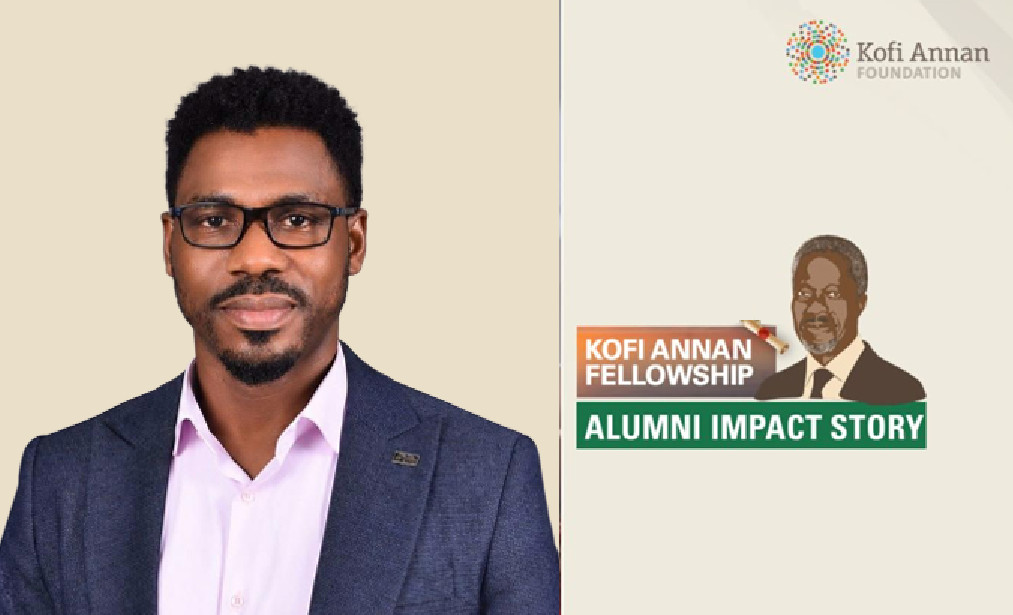
S. Benedict Dossen, a Senior Country Representative for Liberia and Mental Health Regional Lead for Africa at The Carter Center, embodies the vision of the Kofi Annan Fellowship in Global Health Leadership Program (KAF-GHLP) – empowering African leaders to transform public health across the continent. He previously served on the Strategic and Technical Advisory Group (STAG MNS), advising the WHO Director General on mental health, brain health, and substance use disorders. With extensive experience in public health administration, policy and legislative reform, mental health systems strengthening, workforce development, partnerships, and MHPSS emergency response, Benedict sought to further his professional development and leadership aspirations through the KAF-GHLP, drawn by its focus on a new public health order led by Africans.
The Fellowship proved profoundly transformative, enhancing Benedict’s skills in public health diplomacy and boosting his employer’s confidence in his capacity to lead critical international missions. He found the fellowship’s vision of empowering Africans to lead public health initiatives on the continent, while simultaneously contributing to global health, particularly relevant to his own aspirations and commitments to Africa. He currently leads the Center’s mental health initiatives across Africa, supporting the transition to a regional hub designed to accelerate mental health systems strengthening on the continent.
Benedict’s leadership has created a ripple effect in mental health, demonstrating tangible impact across multiple fronts. He has actively championed mental health workforce in the region, supporting the training of mental health clinicians, specialist supervisors, and primary healthcare providers. He co-led the development of the first multi-track master’s degree curriculum for advanced practice and secured scholarships and technical support. His efforts have also secured crucial funding for mental health initiatives and strengthened integration across health and non-health sectors. As a strong advocate for and a dedicated professional in evidence-based practice, he has led and contributed to research on mental health and his work has been published in peer-reviewed journals, including the prestigious journal of the American Society of Tropical Medicine and Hygiene (ASTMH), and presented at regional and international conferences, with several publications in development.
Perhaps most notably, Benedict played a key leadership role in advancing mental health policy and legislative reform in Liberia, including support for the 2017 Mental Health Act and the development of accompanying regulations to operationalize the law. This critical piece of legislation aims to protect the rights and welfare of people with mental health problems. Benedict has provided technical assistance to similar policy and regulatory reform efforts in Sierra Leone and Uganda, helping countries to translate policy commitments into practical systems and services. He also championed the introduction and expansion of Crisis Intervention Team training for law enforcement officers, supporting police, immigration, and corrections officers to respond more effectively to people experiencing mental health crises. The model has been institutionalized within the Liberian National Police, which has trained over 3,800 new officers, and has also been adapted for implementation in Uganda, where plans are underway to train up to 10,000 officers.
His work extends beyond country programs. Working with Africa CDC, academic institutions, and the Kofi Annan Fellowship Program, he supported efforts to incorporate mental health into both the Kofi Annan Fellowship Program and the field epidemiology program across the continent. This curriculum is now utilized in the Kofi Annan Fellowship Program and the mental health leadership and advocacy short course at several universities across the continent, including the University of Ibadan, where Benedict was invited to join the faculty in 2025. He received a national award from the Ministry of Health in Liberia in 2024 for his outstanding contributions to mental health.
Looking ahead, Benedict sees enormous potential for strengthening African leadership in global health through deeper collaboration, peer learning, and investment in locally led solutions. He emphasizes the importance of the Fellowship considering countries at lower stages of development to provide fellows with a more realistic and nuanced understanding of the continent’s diverse challenges. He envisions strengthening the alumni network through conferences and robust support for publications, and actively advocates for the utilization of alumni to assist the Africa CDC and African Union in emergency response, policy reform, research, and health systems strengthening, while continuing to support efforts that position African leaders at the forefront of addressing the continent’s most pressing public health challenges.