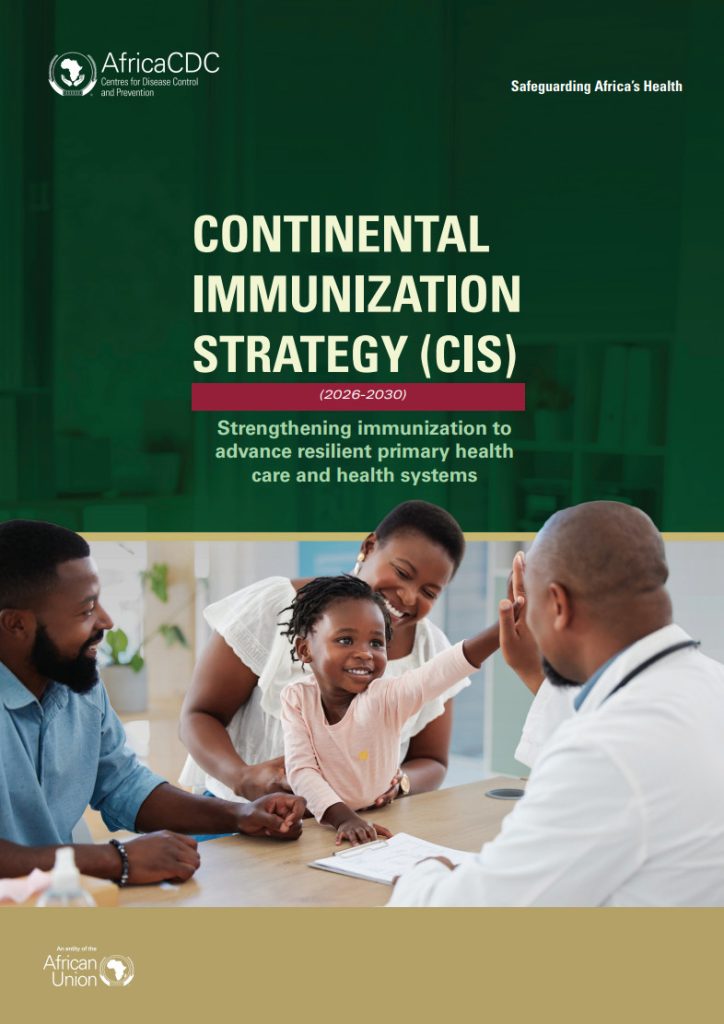
Strengthening immunization to advance resilient primary health care and health systems
OVERVIEW
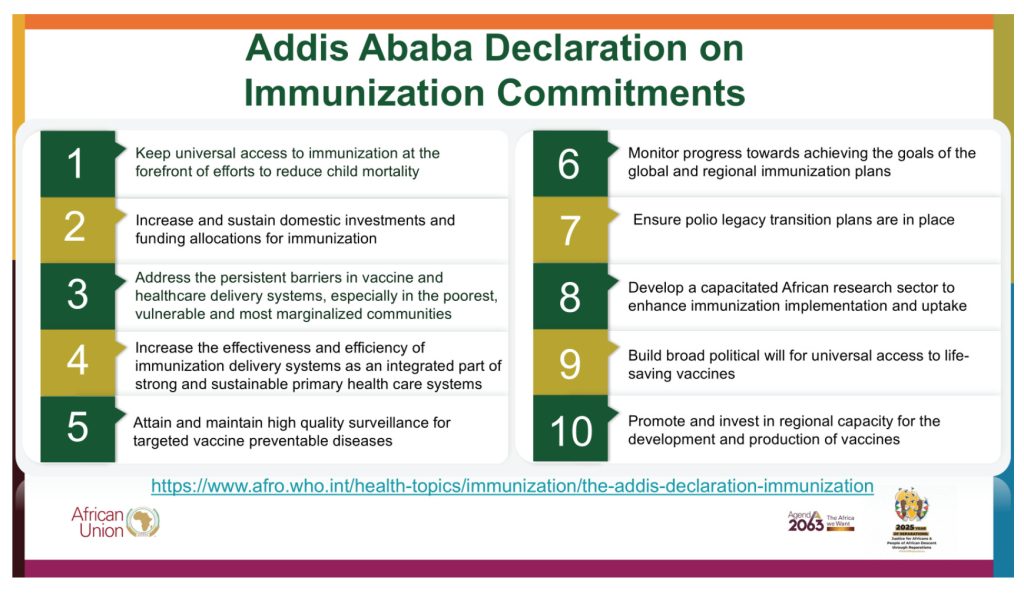
Purpose: The Continental Immunization Strategy (CIS) provides a pragmatic, time-bound roadmap to strengthen immunization systems across Africa by anchoring vaccination within resilient, epidemic-ready primary health care (PHC) and health-security frameworks. It aims to close equity gaps, reach zero-dose populations, and sustain life-course immunization, while advancing the goals of the Addis Declaration on Immunization and Immunization Agenda 2030 (IA2030).
Vision: A continent where every person benefits from equitable, life-course immunization through resilient, epidemic-ready, and domestically financed PHC systems.
Guiding principles: Member State leadership, ownership and financial sustainability; equity and PHC integration; innovation, digital transformation and evidence-based learning; community trust and engagement; partnership coherence and regional collaboration; accountability and results.
The six (6) strategic pillars and key priorities of the CIS Three core pillars
Advocacy, leadership, ownership and sustainable immunization financing: high-level advocacy to institutionalize domestic immunization financing; foster regional peer learning and mutual accountability.
Digital transformation for life-course immunization and data management systems: establishment of interoperable e-registries with information on all live-births (e.g. e-birth registration) connected with national health information platforms such as the District Health Information System, version 2 (DHIS2) to inform a continental knowledge sharing and innovation platform.
Integration of immunization within PHC service delivery: institutionalization of life-course immunization; increased health workforce capabilities, including community health workforce; and context-specific service delivery (fragile and conflict-affected settings).
Three cross-sectoral pillars
Community engagement, trust-building and social and behaviour change for immunization resilience: institutionalization of social and behavioural data and inclusive social and behaviour change (SBC) governance; scale up of community health workers (CHWs) engagement and youth leadership.
African manufacturing, pooled procurement, and vaccine supply chain resilience: scale up the Africa CDC-led procurement mechanism as market shaping tool for vaccines; prioritize near-term vaccine manufacturing scale-up, with a focus on delivering tangible results between 2026 and 2028; and strengthen the vaccine manufacturing ecosystem.
Emergency preparedness, cross-border health security and epidemic-ready immunization systems – harmonize cross-border standard operating procedures (SOPs); expand regional rapid-response and Field Epidemiology and Laboratory Training Programme (FELTP) capacities.
We use cookies to ensure that we give you the best experience on our website. If you continue to use this site we will assume that you are happy with it.