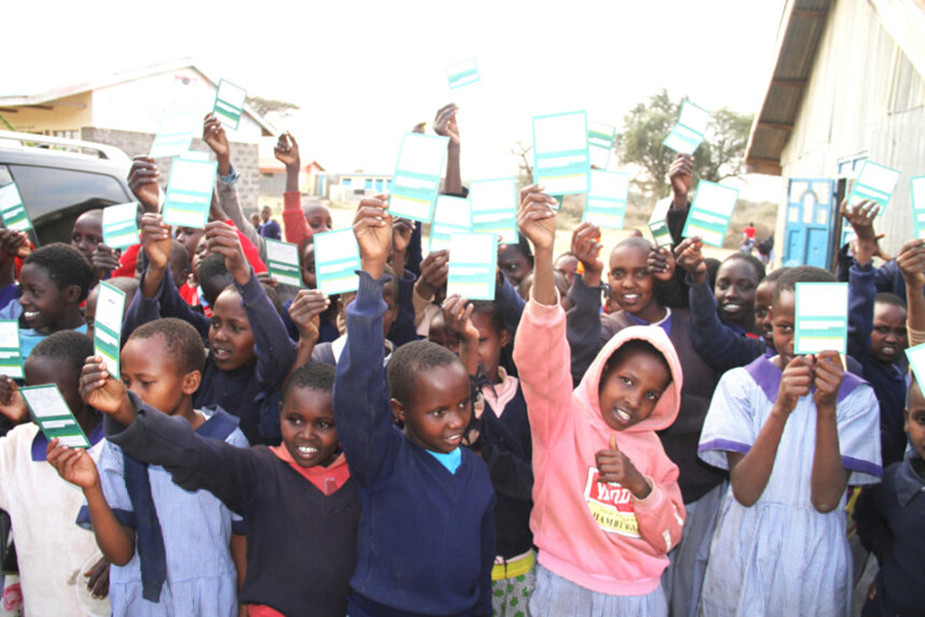
School girls in Kenya display their human papillomavirus (HPV) cards after vaccination | By Sharon Atieno
It is almost 5pm in the evening, when we arrive at Oiti Glory Comprehensive School, Kajiado county, nearly 100km to the southeast of Nairobi. A team of health workers from the county government of Kajiado is packing their tools and equipment. Their work for the day is done. On this day, they have administered human papillomavirus (HPV) vaccine to some 118 girls.
This vaccination outreach has been made possible with support from the Mastercard Foundation in partnership with Africa CDC under the Saving Lives and Livelihoods (SLL) programme. Implemented by Amref Health Africa, Red Cross and Akross, the programme focuses on strengthening the health systems, improving vaccination coverage and life course immunization.
Cervical cancer, caused by HPV, remains a significant public health burden in Kenya being the leading cause of cancer mortality in the country, with an estimated 3,200 annual deaths.
Since 2019, Kenya’s national human papillomavirus (HPV) vaccination programme has aimed to protect young girls from what causes about 70% of cervical cancer cases.
The disease accounts for some 5000 cases annually among Kenyan women with factors such as early sexual debut, multiple sexual partners, a weakened immune system, smoking, hormonal contraception use, and fertility rate among others putting women at risk.
To reduce the burden of cervical cancer, the government of Kenya introduced a national HPV vaccination program which has been running since 2019, targeting girls aged 10-14 years. The vaccine protects against HPV 16 and 18 which are responsible for approximately seven in ten cervical cancer cases.
According to Mary Mathenge, Amref Health Africa, Team Lead SLL Programme, Kenya, there is a lot of mobilization involved before the HPV vaccination outreaches are carried out. “First, you have to engage the teachers, through the Ministry of Education. You have to bring them on board so that they understand why do we need this HPV vaccination. Then again, you have to engage the parent teachers’ association, educate them on why we need this,” she notes.
According to Mary Mathenge (pictured), human papillomavirus (HPV) vaccination outreaches require extensive mobilization.
Hillary Langat, Senior teacher Oiti Glory Comprehensive School notes that this is the second time, the school has had an HPV outreach under the programme. In the previous outreach conducted in December 2024, some 136 girls were vaccinated.
“Before an outreach is carried out, the teachers are usually sensitized about the vaccination, then we come and sensitize the learners and their parents. This helps to reduce vaccine hesitancy,” Langat says, noting that getting consent for vaccination is easier, once the parents are informed.
The few parents who do not understand, are encouraged to call the health care workers to clarify further about the HPV vaccine. Because there’s a lot of misinformation and disinformation in social media surrounding the vaccine, Mathenge adds.
According to Mercy Githara, SLL lead, Kenya Red Cross Society, focusing on risk communication in community engagement and gendered conversations with the women has contributed significantly to increasing uptake of the HPV vaccine in Kajiado County.
Mercy Githara, Saving Lives and Livelihoods (SLL) programme team lead at the Kenya Red Cross Society, notes that risk communication and gender-sensitive community engagement are key in increasing vaccine uptake in the country.
“Our role in risk communication and community engagement ensures that we communicate, and we educate communities and in a gender perspective where we hold discussions with parents who are of the female gender to explain to them what the HPV vaccination is,” Githara says.
“We also talk about issues of cervical cancer to the women so that they understand. And then these women are our get through to the men, this is a patriarchal community and decision-making is made at the level of the men. And then we again work with the schools. Through the ministry of education, we have been able to be given a gate pass to schools where we speak to the girls and do the education. We have dialogues with the girls.”
She notes that the dialogues provide a platform to address issues including misconceptions about the vaccine such as not being able to give birth or bear children. “We dispel some of these misconceptions to the girls and to the women. And then we talk about lived experience of people who have suffered cervical cancer, and they are able to explain some of those things,” Githara adds.
In terms of HPV coverage, Kajiado County ranks third nationally. Since 2024, some 8,322 doses of HPV vaccine have been administered in the county under the SLL programme.
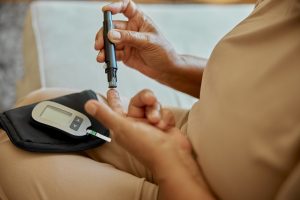
Besides HPV vaccination, the programme is supporting one health outreaches (focusing human and animal health or environmental aspect) and integrated medical outreaches with curative services and screening of non-communicable diseases (NCDs) such as diabetes and hypertension. It is also supporting health care workforce development.
The SLL programme was birthed in 2021 with the aim of strengthening COVID-19 vaccination in the continent. Implemented in 27 countries, specific targets included purchasing COVID-19 vaccines, rolling out vaccinations, building the vaccine manufacturing workforce for the continent, and strengthening the Africa CDC to ensure long-term health security for Africa.
In the second phase (2024-2026), the programme is being implemented in 16 countries including Kenya, with the intention of protecting the healthcare workers, integrating COVID-19 management or resources into routine immunization, preparing for the next pandemic (by protecting healthcare workers and other priority groups from vaccine preventable diseases and strengthening health systems), and strengthening the capacity of Africa CDC.