For centuries, African communities have turned to traditional medicine to treat everything from fevers to infections. Yet, despite serving as the first line of health care for millions, these remedies rarely make it into formal medical systems.
Lacking standardised processes, clinical trials, and regulatory oversight, most traditional medicines remain confined to informal use, their potential largely unrealised. Often misunderstood or dismissed, some are still relegated to the realm of folklore. But that perception is shifting, and the mpox outbreak is contributing to the change.
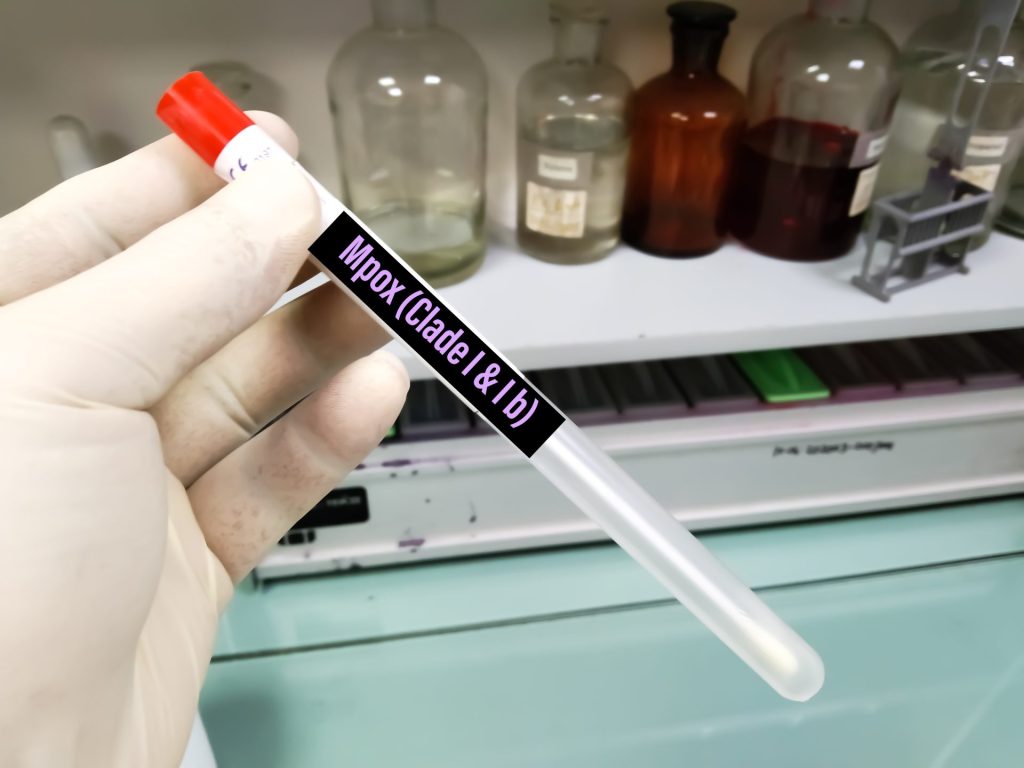
Now in its second year, the outbreak has resulted in 270 confirmed deaths and more than 54,000 cases across 30 African countries. Amid a shortage of vaccines and the complexity of managing multiple clades, where behavioural factors are also at play, researchers across the continent are working to transform traditional remedies into scientifically validated treatments for mpox and other emerging diseases.
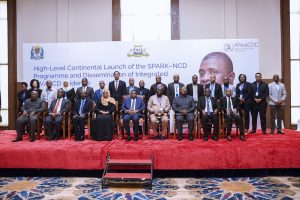
From 17–19 September, the Africa Centres for Disease Control and Prevention (Africa CDC) convened more than 100 researchers, policymakers, and traditional medicine experts in Kampala, Uganda, to accelerate the development of natural therapeutics. The gathering was co-hosted by Uganda’s Makerere Lung Institute (MLI-ICER), the Ministry of Science, Technology and Innovation, and the Democratic Republic of the Congo’s (DRC) CREPPAT Laboratories.
“The mpox crisis presents both a challenge and an opportunity to demonstrate the efficacy of African-led research and development models,” said Dr Mosoka Fallah, Acting Director of Science and Innovation at Africa CDC. “Despite the widespread reliance on traditional medicine, Africa has yet to fully leverage its potential for epidemic response.”
Delegates validated several promising natural compounds with the potential to become effective treatments and agreed to launch multi-country clinical trials. They also endorsed a Continental Framework for Natural Therapeutics Research and Development to guide the next phase of collaboration.
The idea that traditional remedies could be refined into effective treatments is not new. Still, the meeting illustrated the extent of the work underway to convert such remedies into modern medicines.
Uganda’s Clinical Trials on Natural Therapeutics (CONAT) programme, led by Professor Bruce Kirenga, demonstrated how traditional herbal preparations can undergo rigorous clinical evaluation. The model integrates traditional healers, scientists, and regulators in the same research ecosystem, an approach that is now being scaled up across the continent.
From the Democratic Republic of the Congo, Professor Constantin Bashengezi recounted a 40-year journey to develop Dubacil, a broad-spectrum antiviral that has shown potential against mpox. Meanwhile, ongoing collaborations — such as work between PROMETRA Senegal and METRAF Canada — are already repurposing natural products like MoMo30 to treat mpox and other viral infections.
One of the meeting’s most impactful contributions came from Professor Fidele Ntie-Kang of the University of Buea in Cameroon, who unveiled an African Natural Product Database containing more than 11,000 compounds from 1,700 species. His team uses molecular docking and cheminformatics to identify compounds that may inhibit mpox viral enzymes, a pioneering example of data-driven drug discovery on African soil.
Dr Firehiwot Teka from the Armauer Hansen Research Institute (AHRI) in Ethiopia co-developed the Continental Framework for Natural Therapeutics Research and Development. She explained that the framework rests on five pillars: verifying plant sources, assessing safety, standardising formulations, harmonising regulations, and strengthening research capacity.
Professor Nicholas Gikonyo from Kenya’s National Phytotherapeutics Research Centre outlined how traditional medicines are being repurposed for neglected tropical diseases and malaria. His colleague, Professor Samuel Wayizafrom the DRC’s CREPPAT Laboratories, shared how three natural therapeutic products were successfully added to the national drug list, a milestone in integrating traditional medicines into formal health-care systems.
Professor Don Jethro Mavungu Landu from the University of Kinshasa shared updates on Rosandre®, a natural treatment for sickle cell disease. He said two crucial steps are still needed: testing how well it works and how safe it is compared with the more commonly used remedy, hydroxyurea, and ensuring it is affordable and available to all Africans who need it.
Despite this momentum, significant challenges remain in harnessing traditional remedies. Regulatory barriers are complex and differ from country to country. Funding for clinical trials is scarce, and while Africa has the raw materials — ranging from medicinal plants to human talent — infrastructure and manufacturing capacity are still lagging behind.
To tackle these gaps, participants launched the African Network of Natural Therapeutics Scientists, designed to connect laboratories, share data, and build skills across borders.
Uganda’s Minister of Science, Technology and Innovation, Dr Monica Musenero, pledged government support, including office space and staffing for the network. She framed natural therapeutics as a strategic asset for Africa’s health security. “This collaborative effort positions natural therapeutics as a priority for reducing dependency on external sources and championing a Pan-African approach to health security,” she said.
Participants also visited DEI Biopharma, Uganda’s first biotech and pharmaceutical research company, where Africa CDC pledged support to help local manufacturers achieve international accreditation.
The meeting concluded with a multi-phase action plan. Within six months, Africa CDC will operationalise the new continental framework, supported by a secretariat to coordinate implementation. The first milestone will be launching multi-country clinical trials for the most promising mpox treatments, potentially a first for traditional medicine in Africa.
Over the next 18 months, focus will shift towards funding and harmonisation. Partners, including the African Development Bank and Gavi, the Vaccine Alliance, have signalled readiness to invest in laboratory infrastructure, accreditation of manufacturers, and training of scientists. The long-term goal is to integrate validated natural therapeutics into national health systems and secure World Health Organization (WHO) pre-qualification for African-made products.
“Africa’s strength lies in its biodiversity, its people, and its resilience,” said Dr Fallah. “What we need now is to translate that strength into science, and science into sovereignty.”