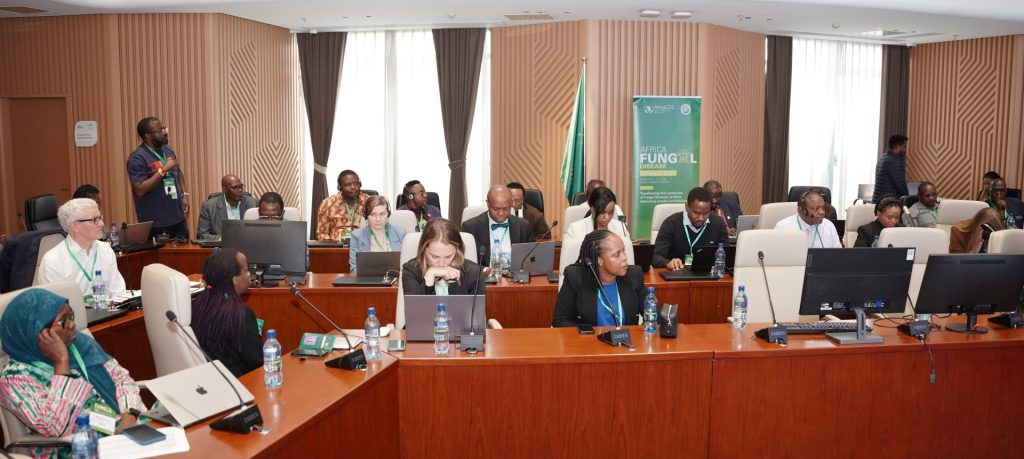
Addis Ababa, Ethiopia, 10 March 2026 – Africa’s first summit dedicated to fungal diseases concluded with a multi-stakeholder commitment to strengthen surveillance, capacity building, access to diagnostics and treatment across the continent.
Co-hosted by the Africa Centres for Disease Control and Prevention (Africa CDC) and the Global Action for Fungal Infections (GAFFI), the summit brought together researchers, clinicians, policymakers, health activists and funders to address what experts increasingly describe as a silent epidemic affecting millions of people worldwide, with Africa bearing a disproportionately high burden.
Fungal infections remain a major public health challenge across the continent. They contribute to nearly half of AIDS-related deaths and complicate diseases such as tuberculosis, chronic obstructive pulmonary disease, asthma and cancer. Fungal keratitis is also a leading cause of blindness. In addition, millions suffer from common skin infections, including zoonotic strains that are becoming more virulent, easily transmitted and increasingly resistant to treatment.
A 2022 survey by GAFFI and Africa CDC revealed severe gaps in the availability and accessibility of essential diagnostics for fungal diseases across 48 African Union Member States, leading to delayed diagnoses and preventable deaths. Experts also highlighted growing concerns about superficial fungal infections driven by newer drug-resistant strains, as well as the emerging threat of Candida auris, which is spreading in several regions.
Participants at the summit, which ran from 2-4 March 2026, agreed to enhance collaboration in research and development (R&D), capacity building, surveillance and clinical care. They also committed to aligning continental initiatives with the forthcoming World Health Organization (WHO) Fungal Priority Pathogens List (FPPL) Blueprint, while adapting these priorities to Africa’s unique contexts to strengthen diagnosis, monitoring and treatment outcomes across the continent.
A recurring theme was the importance of engaging African stakeholders, including civil society and frontline community specialists, in designing effective responses. Patient advocates shared difficult experiences of delayed diagnosis and inappropriate treatment for fungal infections in resource-constrained settings, underscoring the need to raise awareness of these infections among health workers and vulnerable populations.
“The way forward calls for patient‑centred, priority‑driven and impact‑focused collaboration, supported by networks that build and leverage capacity through a hub‑and‑spoke model. It also requires innovative, sustainable local financing for R&D and healthcare to strengthen Africa’s ability to address these diseases, a major cause of morbidity and mortality,” said Dr Elvis Temfack, Africa CDC’s Head of Division, R&D and Clinical Trials Coordination. He added that this aligns with Africa CDC’s wider strategy to reinforce laboratory networks, expand surveillance and build resilient public health systems.
Participants also stressed that sustained political commitment and coordinated action are vital, especially as antifungal resistance rises and new pathogens continue to emerge. “This summit has set a new course for collective action across the continent,” said Emma Orefuwa, GAFFI’s Africa Lead. “We are laying the groundwork for stronger partnerships, improved diagnostic capacity and expanded access to treatment – all essential to reducing the preventable burden of fungal infections in Africa.”
###
About Africa CDC
The Africa Centres for Disease Control and Prevention (Africa CDC) is the public health agency of the African Union. As an autonomous institution, Africa CDC supports AU Member States to strengthen health systems, improve disease surveillance, and enhance emergency preparedness and response. For more information, visit: http://www.africacdc.org and follow Africa CDC on LinkedIn, X, Facebook, and YouTube.
About GAFFI
The Global Action for Fungal Infections (GAFFI) is an international non-profit organisation dedicated to reducing illness and death caused by fungal diseases worldwide. GAFFI works with governments, clinicians, researchers and civil society to improve access to life-saving diagnostics and antifungal treatments, strengthen laboratory capacity, and raise awareness of the global burden of fungal infections. Learn more at https://gaffi.org
Media Contact
Margaret Edwin
Director of Communication and Public Information | EdwinM@africacdc.org
Emma Orefuwa
GAFFI Africa Lead | eorefuwa@gaffi.org