Addis Ababa, 17 April 2026 – Africa is strengthening its response to disease outbreaks through faster, more coordinated and more predictable action, building on lessons from the continental Incident Management Support Team (IMST) activated during the mpox response.
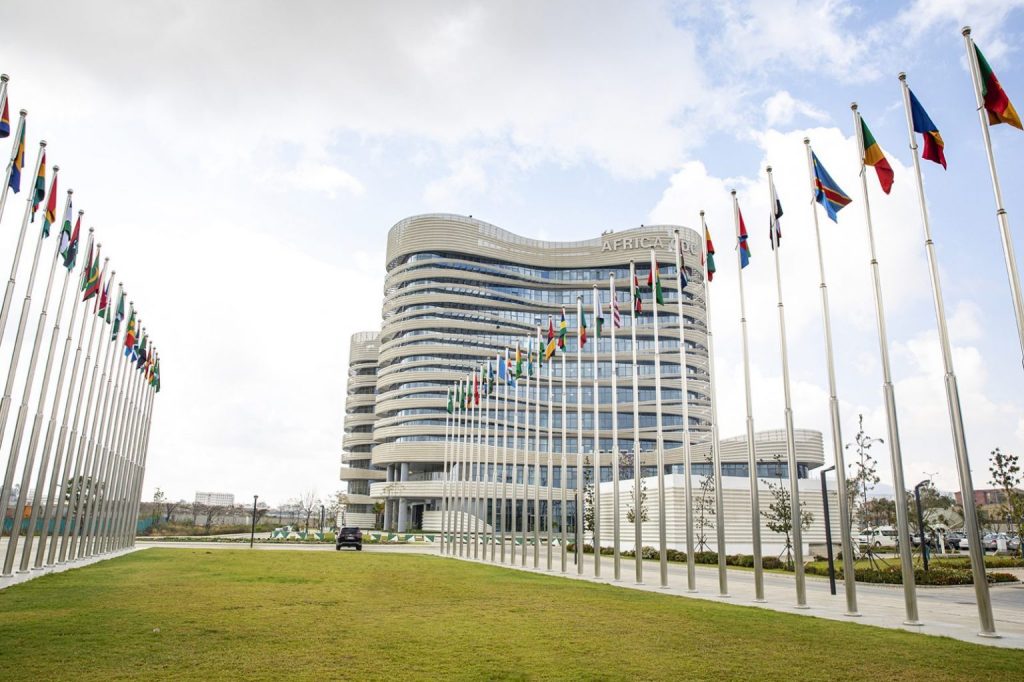
Leading public health institutions, partners and representatives from 30 member states convened at the Africa Centres for Disease Control and Prevention (Africa CDC) headquarters to conclude a high-level review of the IMST, marking a significant step in advancing collective outbreak preparedness and response across Africa.
The five-day meeting brought together officials from Member States, Africa CDC, the World Health Organization (WHO), UNICEF, the International Federation of Red Cross and Red Crescent Societies (IFRC), the Deutsche Gesellschaft für Internationale Zusammenarbeit (GIZ) and other partners to assess performance, capture lessons and identify priorities to strengthen coordination mechanism in future outbreaks, drawing on lessons from the mpox response.
The current IMST was established in August 2024 in response to the mpox outbreak and has since served as a time-bound coordination mechanism to align partners under a unified operational approach. Co-led by Africa CDC and WHO, the IMST operates under a unified “4-Ones” framework – one team, one plan, one budget and one monitoring and evaluation framework – ensuring alignment, shared accountability and coherence across all response pillars.
Since its activation, the IMST has delivered measurable results. More than US$1.1 billion has been mobilised, over five million vaccine doses deployed, and coordinated risk communication and community engagement activities have reached 50 million people across 33 countries. These efforts contributed to an increase in vaccine acceptance from 44 per cent to 87 per cent in targeted settings.
Despite the end of the mpox Public Health Emergency of Continental Security and the Public Health Emergency of International Concern, partners agreed that sustained coordination remains critical. Cholera continues to pose a significant threat, with 14 countries currently managing outbreaks.
“The IMST has demonstrated the value of a single, integrated operational framework that places countries at the centre and partners behind one plan,” said Dr Yap Boum II, the IMST’s deputy incident manager. “This review ensured that the gains made during the mpox response are institutionalised for the future.”
Participants assessed mpox and cholera response performance, focusing on surveillance, vaccination, communication, logistics and cross-border coordination. The discussions identified clear priorities to further strengthen surge capacity, preparedness and country-level support.
At the close of the meeting, partners agreed on a consolidated draft of the IMST operations framework and concept of operations, which will undergo further review and validation through established processes. The framework builds on lessons from recent outbreaks and clarifies activation triggers, roles, and coordination modalities for future responses. It emphasises the IMST as a time‑bound, response‑focused coordination mechanism that can be rapidly activated when needed, while ensuring stronger linkages with preparedness mechanisms and transition arrangements across continental, regional, and country levels.
“The Continental Mpox After Action Review delivered concrete, joint products that will shape more effective responses going forward,” said Dr John Otshudiema, WHO Acting Regional Mpox Incident Manager.
He added: “The Health Emergency Response Framework, the mpox Integration and Transition Road Map, the Surveillance Guidance, and the After-Action Review report together provide a strong, evidence‑based foundation to guide rapid activation, coordinated response, and orderly transition, in full alignment with established emergency response standards.”
###
About Africa CDC
The Africa Centres for Disease Control and Prevention (Africa CDC) is the public health agency of the African Union. As an autonomous institution, Africa CDC supports AU Member States to strengthen health systems, improve disease surveillance, and enhance emergency preparedness and response. For more information, visit: http://www.africacdc.org and follow Africa CDC on LinkedIn, X, Facebook, and YouTube.
Media Contact Margaret Edwin
Director of Communication and Public Information EdwinM@africacdc.org
About World Health Organization
The World Health Organization (WHO) contributes to a better future for people everywhere. Good health lays the foundation for vibrant and productive communities, stronger economies, safer nations and a better world. As the lead health authority within the United Nations system, our work touches people’s lives around the world every day. In Africa, WHO serves 47 Member States and works with development partners to improve the health and well-being of all people living here. The WHO Regional Office for Africa is located in Brazzaville, Congo. Learn more at www.afro.who.int and follow us on Twitter, Facebook and YouTube.
Media Contact Chinyere Blessing Nwonye
Emergencies communications officer
WHO Regional Office for Africa
nwonyec@who.int