Date: 20 February 2026
Location: Addis Ababa, Ethiopia
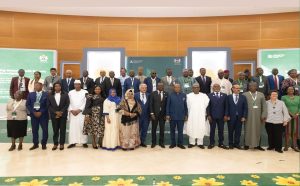
The African Union held its 48th Ordinary Session of the Executive Council and 39th Ordinary Session of the Assembly from 11–15 February 2026 in Addis Ababa, Ethiopia. During the sessions, Heads of State and Government adopted landmark decisions that significantly advance Africa’s Health Security and Sovereignty Agenda. The decisions included the following:
I. AFRICA’S HEALTH SECURITY AND SOVEREIGNTY AGENDA
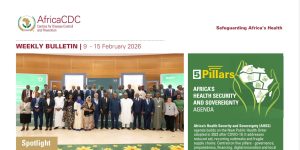
Heads of State and Government acknowledged the strides achieved in preventing and responding to disease outbreaks and endorsed the transition from the New Public Health Order (NPHO) to the Africa Health Security and Sovereignty (AHSS) Agenda, which will serve as the guiding continental framework for long-term health sovereignty, resilience, and self-reliance.
The AHSS Agenda is built on five mutually reinforcing pillars that operationalize sovereignty across the health ecosystem:
a. A reformed and inclusive global health architecture, positioning Africa as a co-architect of global health, with stronger representation and decision-making power in major global health initiatives and forums.
b. An institutionalized continental pandemic prevention, preparedness, and response (PPPR) agenda, integrating surveillance, laboratories, National Public Health Institutes, Public Health Emergency Operations Centres, and emergency workforces into a coherent PPPR system.
c. Predictable, domestic, innovative, and blended health financing, expanding fiscal space for health, strengthening domestic resource mobilization, and aligning external financing with African priorities such as the Lusaka Agenda and the African Epidemics Fund (AfEF).
d. Digital transformation and data sovereignty, building a region- and country-owned digital intelligence ecosystem that enables real-time data flows from communities to national and continental platforms, under robust health data governance.
e. Local manufacturing of health products, accelerating end-to-end African manufacturing of vaccines, diagnostics, and therapeutics, supported by the African Pooled Procurement Mechanism and strengthened regulatory oversight by the African Medicines Agency (AMA), with a goal that by 2040, at least 60% of essential medical countermeasures are produced on the continent.
II. FINANCING HEALTH SOVEREIGNTY AND VOLUNTARY CONTRIBUTIONS
The Assembly welcomed the continued strengthening of Africa CDC’s institutional capacity, resource mobilization, and financial management, including a major expansion of its internally managed grant portfolio and partner-supported investments to Member States. Africa CDC applauds and expresses its profound gratitude to H.E. President João Lourenço and the Republic of Angola for the USD 5 million annual voluntary contribution to AfEF, and for the endorsement of the President Lourenço Initiative for Voluntary Contributions to Africa CDC, aimed at increasing African contributions to Africa CDC and AfEF as a concrete vehicle to operationalize Africa’s health sovereignty.
The Assembly urged Member States and partners to scale up domestic and innovative financing for health, align external health financing under one national plan, one budget, and one monitoring framework, and support capitalization of AfEF and other Agenda 2063 financing instruments.
III. APPOINTMENTS RELATED TO THE HEALTH SECTOR
The Assembly endorsed key leadership and governance measures that will shape Africa’s health future:
a) AU Champions for advancing the AHSS Agenda
- H.E. Samia Suluhu Hassan, President of the United Republic of Tanzania, was appointed AU Champion for Maternal and Child Health.
- H.E. Abiy Ahmed Ali, Prime Minister of the Federal Democratic Republic of Ethiopia, was appointed AU Champion for Artificial Intelligence and Digital Health.
Africa CDC will provide comprehensive technical and operational support to these Champions in executing their mandates and advancing continental health outcomes.
b) Establishment and appointment of an African High-Level Ministerial Committee
The Assembly approved the establishment of an African High-Level Ministerial Committee on the Reform of the Global Health Architecture and requested Africa CDC to report on progress, reinforcing the continent’s collective voice and agency in global health governance.
IV. ESTABLISHMENT OF THE AFRICAN MEDICINE PRIZE
The Assembly approved the establishment of an independent High-Level African Medical Scientific Committee under the auspices of Africa CDC and authorized the creation of the African Medicine Prize, to be awarded annually on the margins of the AU Assembly.
The Prize will recognize outstanding African excellence in medicine and public health, elevate African scientific contributions, and inspire the next generation of health professionals and researchers.
V. COMMENDATION FOR MPOX PUBLIC HEALTH EMERGENCY MANAGEMENT
The Assembly commended Africa CDC for the historic declaration, effective management, and—in January 2026—the lifting of mpox as a Public Health Emergency of Continental Security (PHECS), reflecting strengthened surveillance, genomic sequencing, National Public Health Institutes, Public Health Emergency Operations Centres, and coordinated response mechanisms.
VI. DATA, DIGITAL TRANSFORMATION, AND NON-COMMUNICABLE DISEASES
a) Data Sharing Agreement and digital transformation
The Assembly encouraged Member States to sign the Africa CDC Data Sharing Agreement, accelerate adoption of the forthcoming Africa Health Data Governance Framework, integrate with the Central Data Repository, and digitize primary health care and community health workforce programmes to strengthen real-time epidemic intelligence.
b) Non-communicable diseases
The Assembly adopted the AU Common African Position on Non-Communicable Diseases, Injuries and Mental Health (NCDIMH) and the Multisectoral Engagement, Coordination and Action Framework (MECA), positioning Africa CDC to support Member States in reducing premature mortality, preventing injuries, and strengthening mental health systems.
c) Local manufacturing and pooled procurement
The Assembly encouraged Member States to support implementation of the African Pooled Procurement Mechanism (APPM), the African Vaccine Manufacturing Accelerator, and related pooled procurement arrangements to expand local manufacturing and secure equitable access to vaccines, medicines, and health technologies.
The Assembly commended H.E. President William Ruto, AU Champion for Local Manufacturing, for convening an Extraordinary Summit on end-to-end local manufacturing of health commodities in Nairobi, Kenya, in May 2026, and requested that Africa CDC work with AUC-HHS, AUDA-NEPAD, AMA, and AfCFTA to support its organization and report outcomes to the 40th Ordinary Session of the Assembly in 2027.
VII. GLOBAL HEALTH GOVERNANCE AND PARTNERSHIPS
The Assembly strongly supported Africa CDC in its application for membership and representation in major global health initiatives, including Gavi, CEPI, the Global Fund, and the Pandemic Fund, as well as its broader mandate to unify Africa’s voice in global forums such as the G20, G7, World Health Assembly, and Joint External Evaluation processes.
The Assembly called upon Member States and partners to collaborate with Africa CDC to ensure that global partnerships reinforce, rather than substitute, Member State commitments, and to align procurement and support with continental priorities for local manufacturing and health sovereignty.
VIII. COMPLEMENTARITY WITH THE AFRICAN MEDICINES AGENCY (AMA)
The Assembly took note of the full operationalization of AMA and reaffirmed that AMA is the Union’s specialized agency for the continental regulatory framework for medical products, while Africa CDC is mandated to lead coordination of the health products manufacturing ecosystem through the Platform for Harmonized African Health Manufacturing (PHAHM).
The Assembly reaffirmed that there is no legal or institutional mandate conflict between AMA and Africa CDC and that their mandates are complementary: Africa CDC leads on public health prioritization, market coordination, demand creation, and pooled procurement, while AMA leads on regulatory standards, regulatory science, joint assessments, inspections, and related regulatory capacity-building.
IX. REPORTING AND ACCOUNTABILITY
The Assembly directed Africa CDC to report on progress in implementing the AHSS Agenda, the Lusaka Agenda, APPM, AfEF, digital transformation, and pandemic preparedness and response capacity strengthening to the 49th and 50th Ordinary Sessions of the Executive Council, the 8th Mid-Year Coordination Meeting, and the 40th Ordinary Session of the Assembly between June 2026 and January 2027.
Africa CDC will also actively support and participate in:
a. Conference on Public Health in Africa (CPHIA 2026), 8–12 November 2026, Addis Ababa, Ethiopia.
b. Extraordinary Summit on end-to-end local manufacturing of health commodities, May 2026, Nairobi, Kenya.
Dr. Jean Kaseya
Director General
Africa Centres for Disease Control and Prevention