African Health Workforce Compact | Investment Case Analysis Report
Introduction
Background
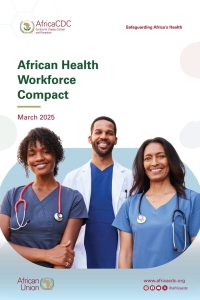
This Investment Case document was developed in the context of the African Health Workforce Compact, developed to implement the Decision of the Assembly of Heads of State and Government during its Thirty-Fifth Ordinary Session held in Addis Ababa, Ethiopia from 5–6th February 2022 (Assembly/AU/Dec.4(XXXV) of 2022 that called on AU Member States to accelerate investment in health workforce development and mandated Africa CDC to champion this continental drive. There are several relevant facts underlying this, including that an additional 6.1 million health workers will be needed in Africa by 2030 to achieve universal health coverage (UHC) targets,¹ and that only two countries on the continent have achieved the target of 15% of annual budgets allocated to health per the Abuja Declaration on HIV/AIDS, Tuberculosis and Other Related Infectious Diseases (OAU/SPS/ABUJA/3), 27/04/2001. Additionally, the African Development Bank estimates that the losses due to Africans leaving the continent for medical tourism is US$2.4 trillion – suggesting that investments in health workforce can avert or reduce these economic losses.²
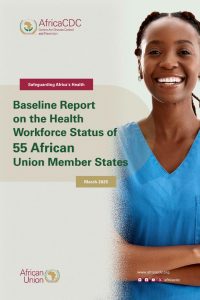
This document draws upon findings in the Baseline Report <hyperlink>, data from Member States, and data from additional sources to calculate, among other things, the deaths averted, DALYs, and costs in U.S. dollars of status quo-, moderate-, and ambitious investments in health workforce development, including with cadre-specific calculations. These projections and calculations underscore the necessity for a unified and comprehensive continental approach to the health workforce, as outlined in the African Health Workforce Compact <hyperlink>. Crucially, this Compact document establishes a Health Workforce Task Team, a multiagency working group that will work across six different workstreams, including a Workstream on Financing and Resource Mobilisation, which the findings in this Investment Case will guide.
Objectives And Scope
The report presents detailed results showing the impact of investments in health workers in Africa. It estimates the costs and benefits of investments in health workers to meet the health workforce requirements to achieve universal health coverage “targets”. The results also show the return on investment in the health workforce on the continent. The impact of health worker emigration was assessed in terms of cost education spending, morbidity caused by emigration, and lives cost. These assessments were done for each country and aggregated for the five regions of the African Union. A selected list of health worker cadres has been identified as critical to advancing universal access to health services in Africa, and pandemic preparedness. These cadres, which included medical officers or general practitioners, medical specialists, nurses and midwives, community health workers, laboratory scientists and technicians, biomedical engineers, field epidemiologists, and public health informaticians, were used in the analysis.
We use cookies to ensure that we give you the best experience on our website. If you continue to use this site we will assume that you are happy with it.