Addis Ababa, Ethiopia, 18 May 2026 – The Africa Centres for Disease Control and Prevention (Africa CDC), acting on the recommendations of its Emergency Consultative Group (ECG), has officially declared the ongoing Bundibugyo ebolavirus disease outbreak affecting the Democratic Republic of the Congo (DRC) and Uganda a Public Health Emergency of Continental Security (PHECS).
This declaration, under Article 3, Paragraph F of the Africa CDC Statute, empowers the organisation to lead and coordinate responses to significant public health emergencies across the continent. The statute mandates Africa CDC to “coordinate and support Member States in health emergency responses, particularly those declared a PHECS or Public Health Emergency of International Concern (PHEIC), as well as health promotion and disease prevention through health systems strengthening.”
The declaration follows extensive consultations at political, strategic and technical levels, including consultations with H.E. Mahmoud Ali Youssouf, the African Union Commission chairperson; H.E. Cyril Ramaphosa, President of South Africa and the African Union Champion for Pandemic Preparedness, Prevention and Response (PPPR); and consultations with Member States affected or at risk. This declaration was built on recommendations from the ECG, chaired by Professor Salim Abdool Karim, which reviewed the evolving epidemiological situation, regional risks, response capacities, and the implications of the confirmed Bundibugyo ebolavirus strain.
To date, about 395 suspected cases and 106 associated deaths have been reported in the DRC (mainly in the Mongwalu, Rwampara, and Bunia Health Zones) and in Kampala, Uganda, where two cases and one death have been reported so far.
Africa CDC is deeply concerned about the high risk of regional spread due to intense cross-border population movement, mining-related mobility, insecurity in affected areas, weak infection prevention and control measures, community deaths occurring outside formal healthcare systems, and the proximity of affected areas to Rwanda and South Sudan.
H.E. Dr Jean Kaseya, Director General of Africa CDC, emphasised the urgency of coordinated continental action: “Today, we declare this PHECS to mobilise our institutions, our collective will, and our resources to act swiftly and decisively. The confirmation of the Bundibugyo ebolavirus in interconnected countries reminds us once again that Africa’s health security is indivisible. We must act early, act together, and act based on science.”
Dr Kaseya highlighted that the declaration would strengthen regional coordination, facilitate rapid mobilisation of financial and technical resources, reinforce surveillance and laboratory systems, support the deployment of emergency responders, and accelerate preparedness activities in neighbouring countries considered at heightened risk of transmission.
He further stressed the importance of an Africa-led and partner-supported response: “This outbreak is occurring in one of the most complex operational environments on the continent, marked by insecurity, population mobility, fragile health systems, and limited medical countermeasures for the Bundibugyo ebolavirus disease. We call upon our Member States and international partners to stand together with Africa CDC, the World Health Organization (WHO), UNICEF and the affected countries to prevent further spread and protect our populations.”
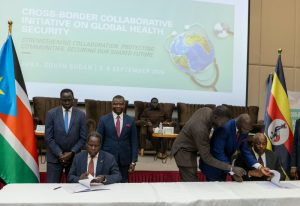
Africa CDC and the WHO are working jointly to strengthen coordination by activating an Incident Management Support Team (IMST), building on the successful model used during the mpox and cholera responses under the “4 Ones” principle: one team, one plan, one budget, and one monitoring framework.
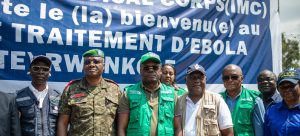
Africa CDC has already deployed multidisciplinary experts, including specialists in epidemiology, infection prevention and control, laboratory systems, risk communication, logistics and emergency coordination, and has internally mobilised US$2 million to support the continental response.
The declaration also comes amid growing concerns about the limited availability of validated vaccines and therapeutics for the Bundibugyo ebolavirus disease. Africa CDC is therefore working closely with various partners to assess available medical countermeasures and accelerate operational research and evidence generation efforts to inform outbreak response strategies.
Professor Karim, chair of the ECG, noted: “The ECG carefully reviewed the epidemiological evidence, regional risk profile, and operational realities surrounding this outbreak. The interconnected nature of transmission between DRC and Uganda, combined with the challenges posed by insecurity and cross-border movement, requires urgent coordinated continental action.”
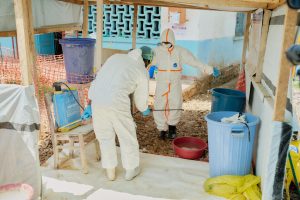
Ebola is a severe and often fatal illness transmitted through direct contact with bodily fluids of infected persons, contaminated materials, or deceased individuals infected with the virus. Early detection, rapid isolation and care, contact tracing, infection prevention and control, community engagement, and safe and dignified burials remain essential to interrupt transmission.
Africa CDC will continue to provide regular updates as additional epidemiological, laboratory, and sequencing information becomes available.
###
About Africa CDC
The Africa Centres for Disease Control and Prevention (Africa CDC) is the public health agency of the African Union. As an autonomous institution, Africa CDC supports AU Member States to strengthen health systems, improve disease surveillance, and enhance emergency preparedness and response. For more information, visit: http://www.africacdc.org and follow Africa CDC on LinkedIn, X, Facebook, and YouTube.
Media Contact:
Wilson Johwa, Senior Communications Officer, Directorate of Communication & Public Information | JohwaW@africacdc.org