Executive Summary
The year 2025 marked a transformative chapter for Africa CDC, firmly positioning the institution as a leading force in advancing health security and sovereignty across the continent. Moving beyond its initial crisis-response orientation, Africa CDC delivered tangible, measurable impact while redefining governance, shaping the continental health narrative, and producing demonstrable outcomes across the five strategic pillars of the Africa Health Security and Sovereignty (AHSS) Agenda. Responsive to Africa’s realities and the evolving global context, this shift reflects a decisive transition from reactive emergency management to a phase defined by system strengthening, institutional maturity, and sustained continental leadership.
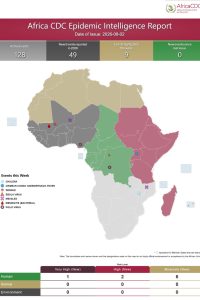
In 2025, the continent confronted a convergence of epidemiological risk, fiscal stress, and geopolitical fragility. Africa faced simultaneous outbreaks of cholera, Marburg, mpox, and measles, with public health events rising to 213 in 2025. This complex landscape necessitated a strategic shift from the New Public Health Order to the Africa AHSS Agenda, which responds to the reality where health shocks carry profound security, economic and sovereignty implications. Amid shrinking fiscal space and geopolitical supply chain vulnerabilities, the AHSS framework reframes health security as a core state function requiring continental leadership, sustainable financing, and local manufacturing to reduce dependence and safeguard national agency.
Grounded in African solidarity and reinforced by strengthened governance and operational systems, Africa CDC has effectively translated political mandates into coordinated action—supporting Member States during health emergencies while simultaneously driving long-term structural transformation. This report provides a comprehensive account of these achievements, offering critical insights into the evolving health security landscape and documenting progress in implementing the 2023–2027 Strategic Plan as Africa CDC continues to consolidate its role as the cornerstone of Africa’s public health architecture.