
Addis Ababa, 21 November 2025 — The Africa Centres for Disease Control and Prevention (Africa CDC) has launched an online platform that will allow researchers across the continent to share vital genomic data on disease-causing pathogens of concern to Africa.
Known as the Africa Genome Archiving for Response and Insight (AGARI), the platform is the product of a partnership between Africa CDC, the African Society for Laboratory Medicine (ASLM), and Member States. It will serve as a secure, continent-wide system for genomic data, enabling countries to share and analyse sequencing information for faster, smarter public health decision-making.
AGARI is a reaction to the rapid growth in genomic sequencing capacity. While in 2019 only seven African countries could conduct even basic genomic sequencing in their public health laboratories, today 46 countries are able to do so. This dramatically enhances the continent’s ability to detect and respond to outbreaks such as Mpox, cholera, Ebola, and Marburg, as well as other public health threats including antimicrobial resistance.
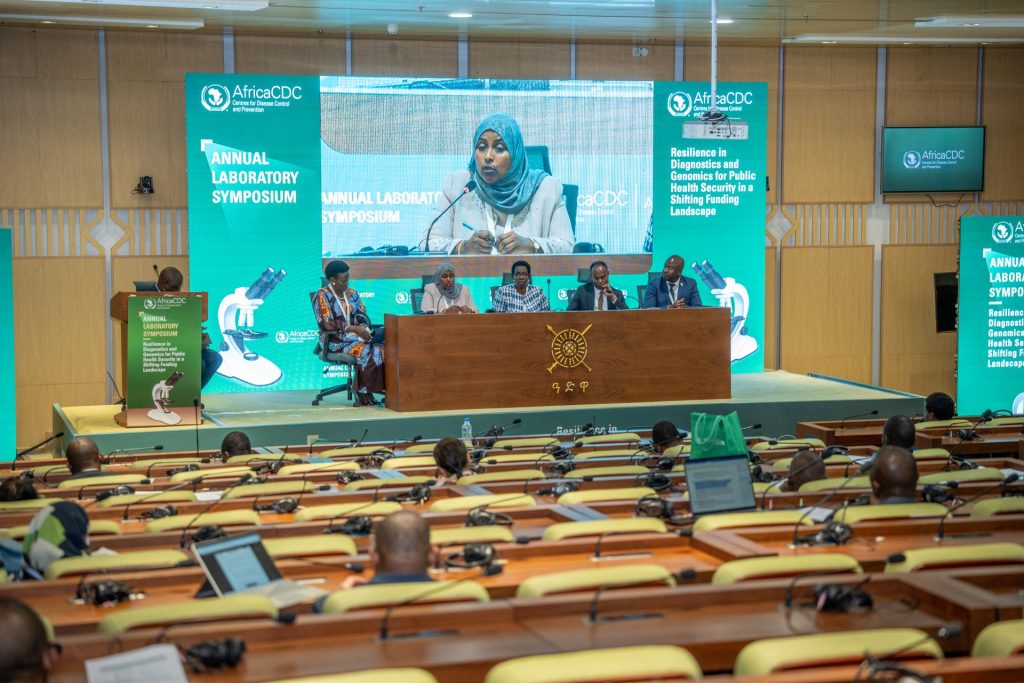
“There is strength in numbers; AGARI will enable us to share genomic data and insights, learning from each other’s experiences to strengthen outbreak response,” said Dr Diana Atwine, Uganda’s Permanent Secretary for Health. She unveiled the platform during Africa CDC’s annual laboratory symposium, which brought together scientists, policymakers, partners, and innovators from across Africa and beyond to exchange best practices and reinforce collaboration.
Developed by African experts and coordinated by the Africa Pathogen Genomics Initiative (Africa PGI), AGARI is more than a website. It acts as a centralised hub for archiving, analysing, and sharing genomic sequencing data and related information. The innovation enables real-time pathogen detection and accelerates decision-making to contain outbreaks before they spread. Significantly, AGARI empowers African Union Member States to maintain control over their genomic data and use it effectively for public health action.
“The AGARI platform has been co-developed with Member States over seven years,” said Professor Alan Christoffels, advisor to the Africa CDC pathogen programme and lead on the project. “We are excited that the data portal respects national sovereignty and allows real-time collaborative response to disease threats impacting Africa and the rest of the world.”
Genomics is a vital part of laboratory systems, often described as the silent engine of public health — driving disease surveillance, outbreak detection, diagnostics, and universal health coverage. Yet these systems face challenges, including reductions in external funding.
In response, many countries are integrating public health functions to minimise duplication and optimise resources. AGARI strengthens this integration by providing a shared, secure platform that maximises the value of genomic data and reinforces the role of laboratories in protecting health across Africa.
The Head of the Laboratory Systems Division at Africa CDC, Dr Yenew Tebeje, commented: “The African bioeconomy has the potential to grow quickly and can be one of the innovative financing mechanisms to sustain critical laboratory services in this era of declining international support. For this, the continent must establish strong biobanking networks, data archiving and sharing platforms, and negotiate effectively on Pathogen Access and Benefit Sharing. The launch of AGARI is a major milestone in this regard.”
ASLM CEO Mr Nqobile Ndlovu remarked: “AGARI marks a defining moment for Africa — where our data, our science, and our sovereignty converge to power the next generation of public health intelligence. This platform embodies Africa’s ownership of its genomic future — transforming shared data into shared strength and driving innovation through trust, collaboration, and collective purpose.”
###
About the Africa CDC
The Africa Centres for Disease Control and Prevention (Africa CDC) is a public health agency of the African Union. It is autonomous and supports member states in strengthening health systems. It also helps improve disease surveillance, emergency response, and disease control. Learn more at: http://www.africacdc.org and connect with us on LinkedIn, Twitter, Facebook and YouTube
Media Contacts
Margaret Edwin
Director of Communication and Public InformationEdwinM@africacdc.org